Research Highlights
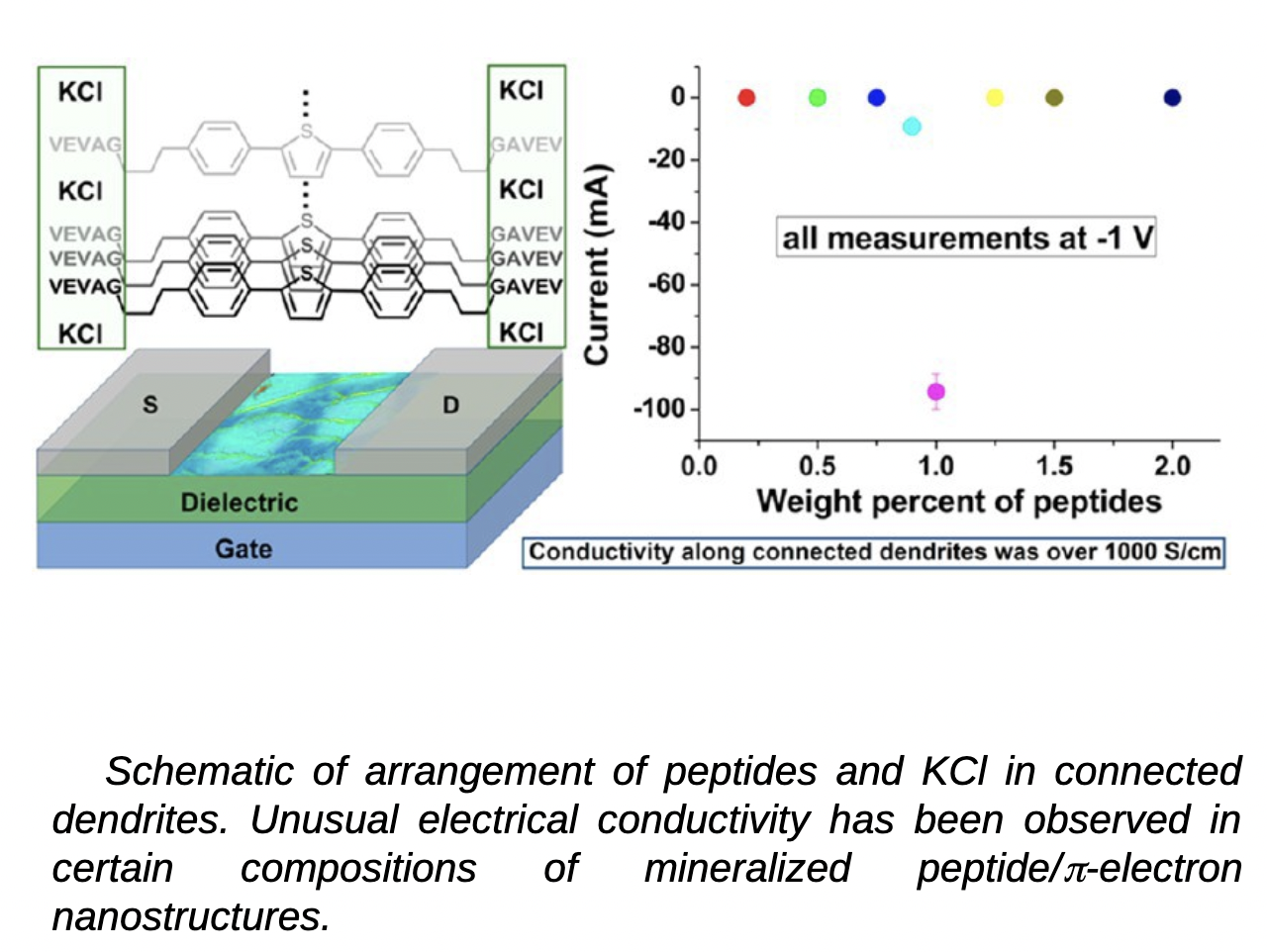
Conductive Organic-inorganic Nanostructures
J. Tovar and H. Katz (Johns Hopkins U.)
Dendritic structures assembled via connections between mineralizing KCl crystallites initiated by pH-triggered self-assembly of peptide materials was demonstrated. Connected structures were found to be the most important factor for producing highly conductive nanowire assemblies that showed conductivity comparable to that of a metal (~1800 S/cm). Measurements of conductivity over time and conductivity quenching by ammonia suggested the conductivity of these dendritic networks was derived from proton doping of the central π-electron units in strong acid environment and was facilitated by closely spaced chromophores leading to facile π-electron transfer along the interconnected dendritic pathways. It is expected that more electrically relevant materials may be able to be templated through this approach.
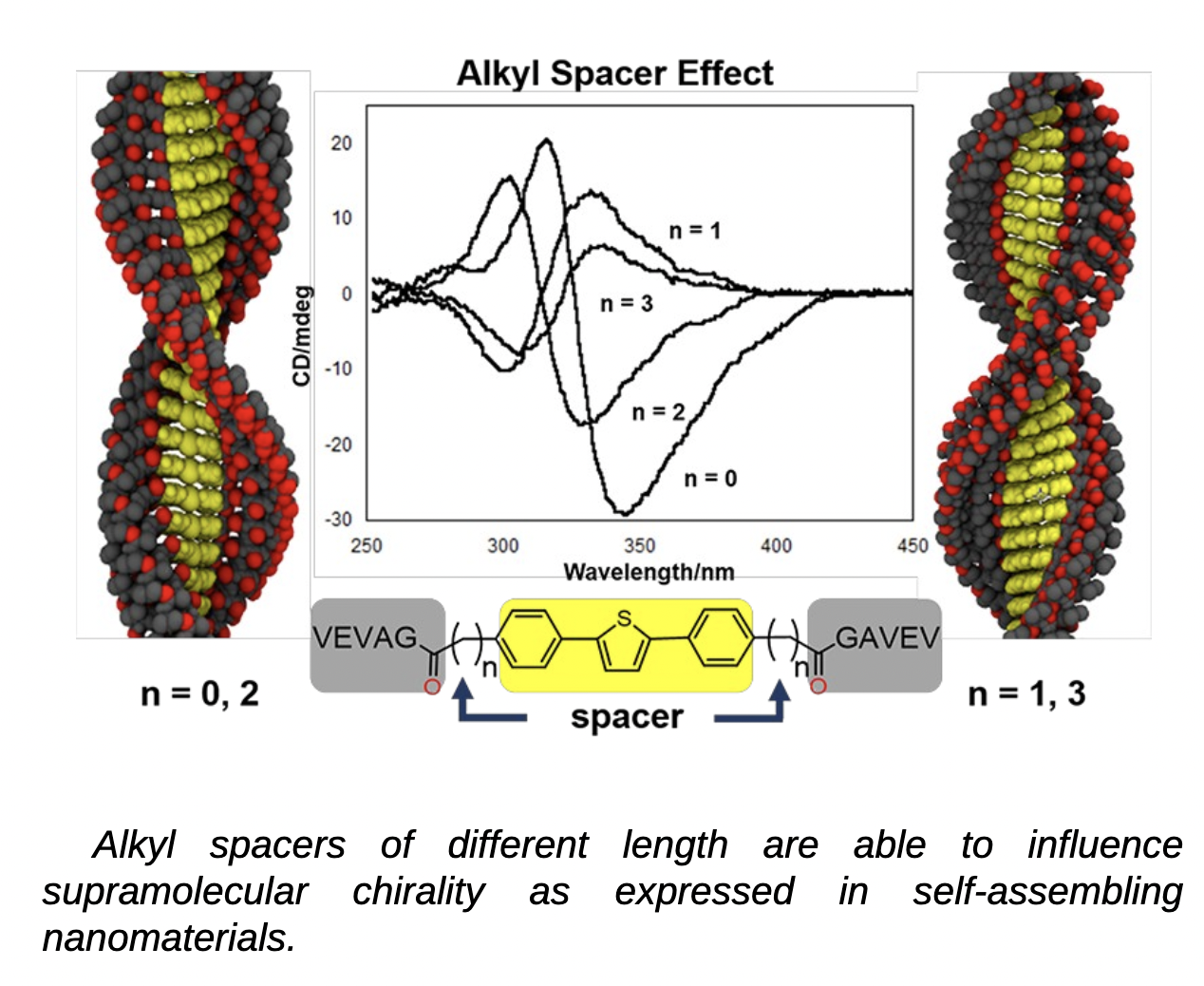
Controlling Supramolecular Chirality in Peptide-p-peptide Networks
J. Tovar (Johns Hopkins U.) A. Ferguson (U. Chicago)
Synthetic peptide libraries to probe chiroptical properties.We found that carbon spacers between pi-conjugated electronic units and flanking peptide sequences had a profound impact on the superstructural chirality of the nanomaterials that form after self-assembly. The origins of this control were elucidated through computational analysis. These findings are of importance for chiroptical applications such as circularly polarized luminescence.

Machine Learning-enabled Computational Discovery of Self-assembling Biocompatible Nanoaggregates
J. Tovar (Johns Hopkins U.) A. Ferguson (U. Chicago)
Designing Materials to Revolutionize Our Engineering FutureIntellectual MeritMachine Learning-enabled Computational Discovery of Self-assembling Biocompatible NanoaggregatesElectronically active organic molecules have demonstrated great promise as novel soft materials for energy harvesting and transport. Self-assembled nanoaggregates formed from p-conjugated oligopeptides composed of an aromatic core flanked by oligopeptide wings offer emergent optoelectronic properties within a water-soluble and biocompatible substrate.
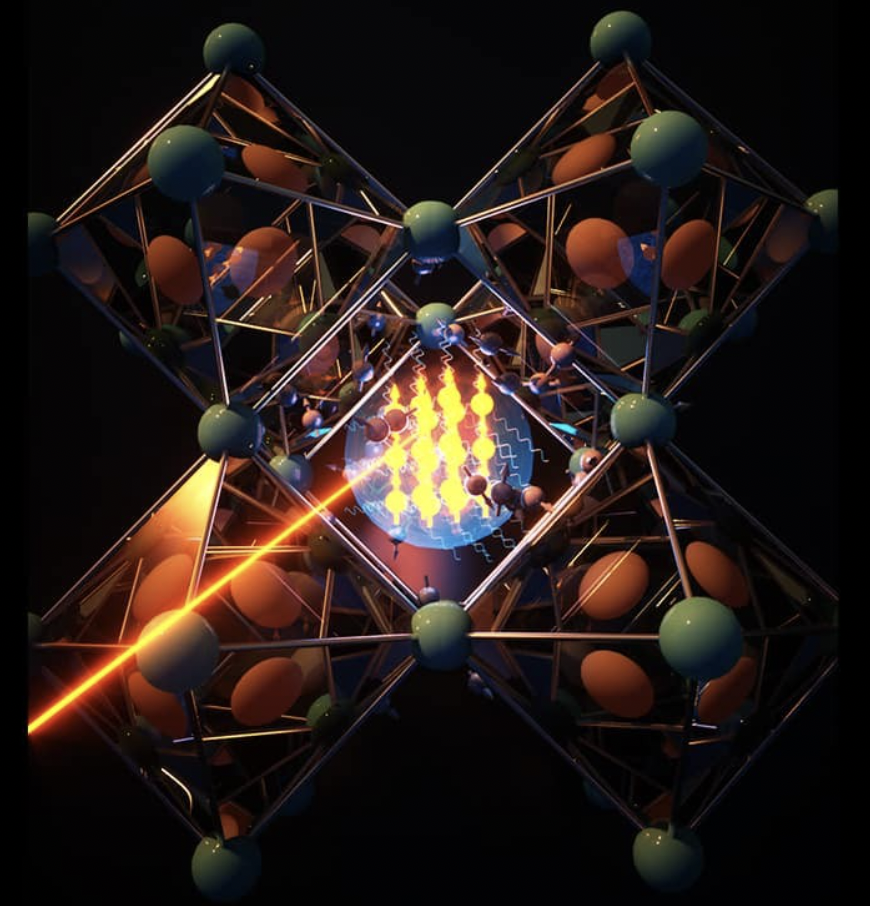
Room-temperature Superfluorescence in Hybrid Perovskites
F. So, K. Gundogdu
Semiconducting perovskites that exhibit superfluorescence at room temperature do so through built-in thermal “shock absorbers” which protect dipoles within the material from thermal interference.
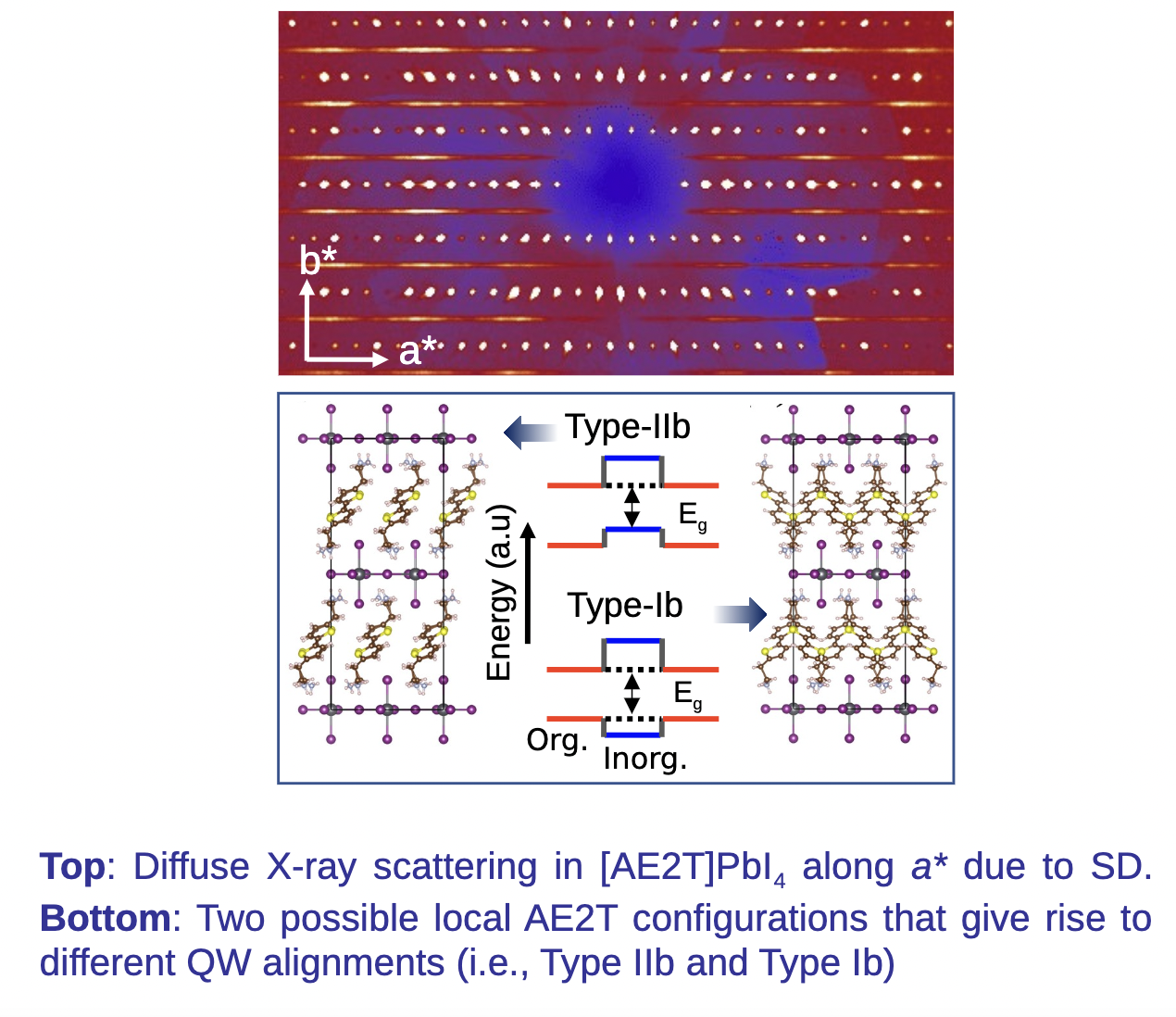
Resolving Stacking Disorder in Layered Peovskites
W. You (U. NC), V. Blum, D. Mitzi (Duke U.)
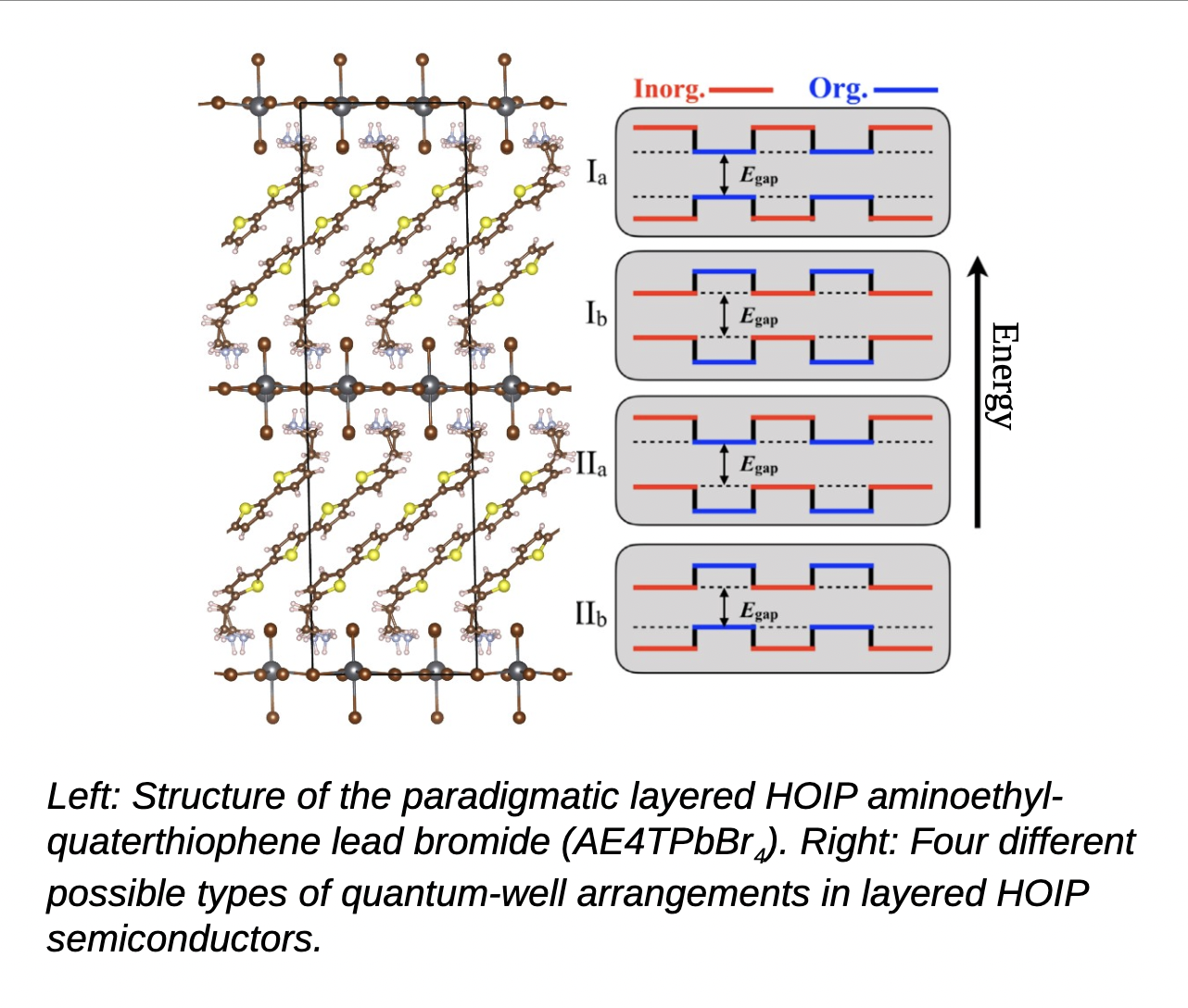
The exceptional properties of 2D hybrid organic-inorganic perovskites (HOIPs) are strongly correlated with atom-level structural details. Stacking disorder (SD) often arises in 2D HOIPs due to quasi-random stacking of inorganic and organic layers, i.e., with no long-range correlations of structural configurations. SD manifests as diffuse X-ray scattering and substantially complicates an accurate crystal structure description

2D Iodide-based Double Perovskite Templatedby Oligothiophene Spacer Cation
K. Gundogdu (NC State U.), W. You (U. NC), V. Blum, D. Mitzi (Duke U.)
In an effort to identify lead-free 2D hybrid organic-inorganic perovskites (HOIPs), double perovskites (DPs) with mixed-valent dual metals such as Ag and Bi are attractive. Additionally, replacing chloride and bromide anions with iodide represents an important target in these systems, due to associated lower bandgaps. So far iodide 2D DPs have proven inaccessible in bulk form when using traditional spacer cations, due to intrinsic instability or formation of competing non-perovskite phases.
Tunable Semiconductors: Organic-inorganic Hybrids
W. You, Y. Kanai (U. NC)D. Mitzi, V. Blum (Duke U.)
We use high-level computational theory to demonstrate how a novel class of crystalline semiconductor materials, so-called layered hybrid organic-inorganic perovskites (HOIPs), can be designed at the atomic scale to provide targeted semiconductor properties. The tun-ability of the materials arises from the atomic-scale combination of an inorganic semi-conductor integrated with functionalized organic molecules that offer a wide range of properties.
Unique Properties of One-Dimensional Materials
F. Homrich da Jornada (Stanford), A. A. Balandin, L. Bartels (U. CA – Riverside)
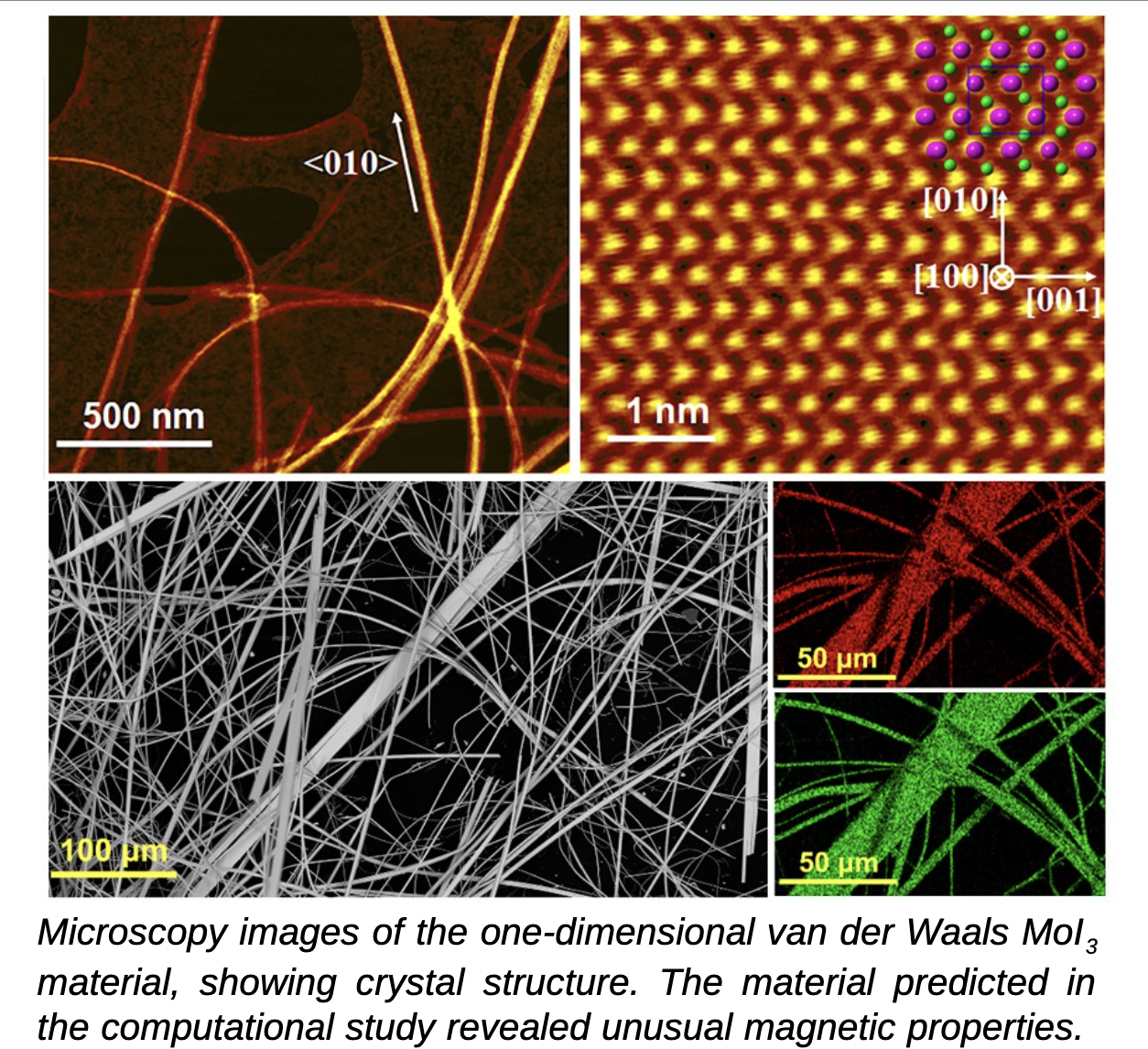
We synthesized and investigated MoI3, a van der Waals material with a “true one-dimensional” crystal structure that can be exfoliated to individual atomic chains. Machine learning allowed to establish the existence of MoI3 with 1D crystal structure as opposed to the previously suggested 2D structure.
Designing Exceptional Gas-separation Membranes with Machine Learning
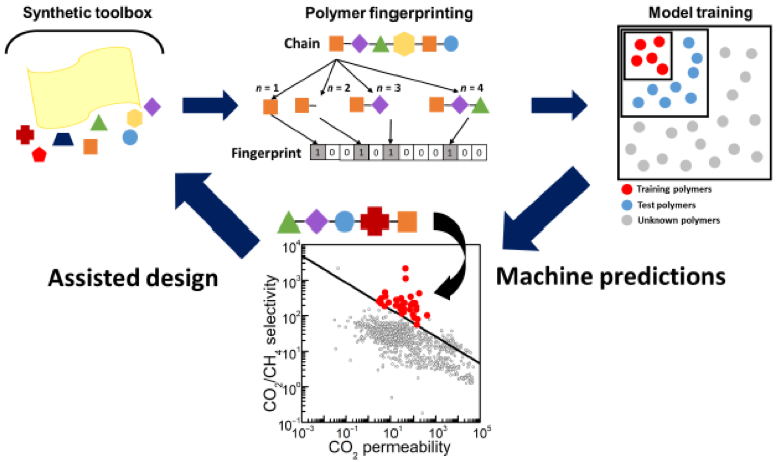
The field of polymer membrane design is primarily based on empirical observation, which limits discovery of new materials optimized for separating a given gas pair. Instead of relying on exhaustive experimental investigations, this team has trained a machine learning algorithm, through use of a topological, path-based hash of the polymer repeating unit.
Designing the World’s Brightest Fluorescent Materials
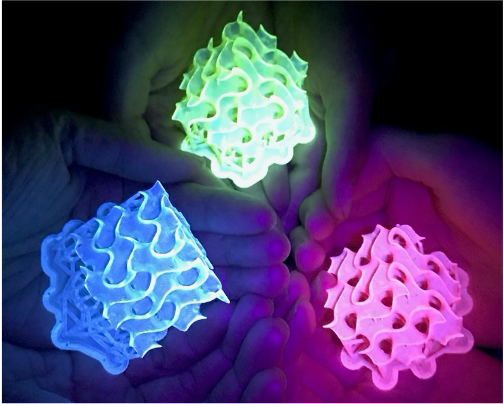
The brightest fluorescent material has been created, solving a problem that’s persisted in the field for more than a century. While fluorescent dyes are potential key components of materials needed for applications including efficient solar cells, medical diagnostics, and organic light emitting diodes (LEDs), electronic coupling between them in the solid state quenches their emission. Small-molecule Ionic Isolation Lattices (SMILES) provide a solution to this long-standing problem.
Showing 111 to 120 of 120