Research Highlights
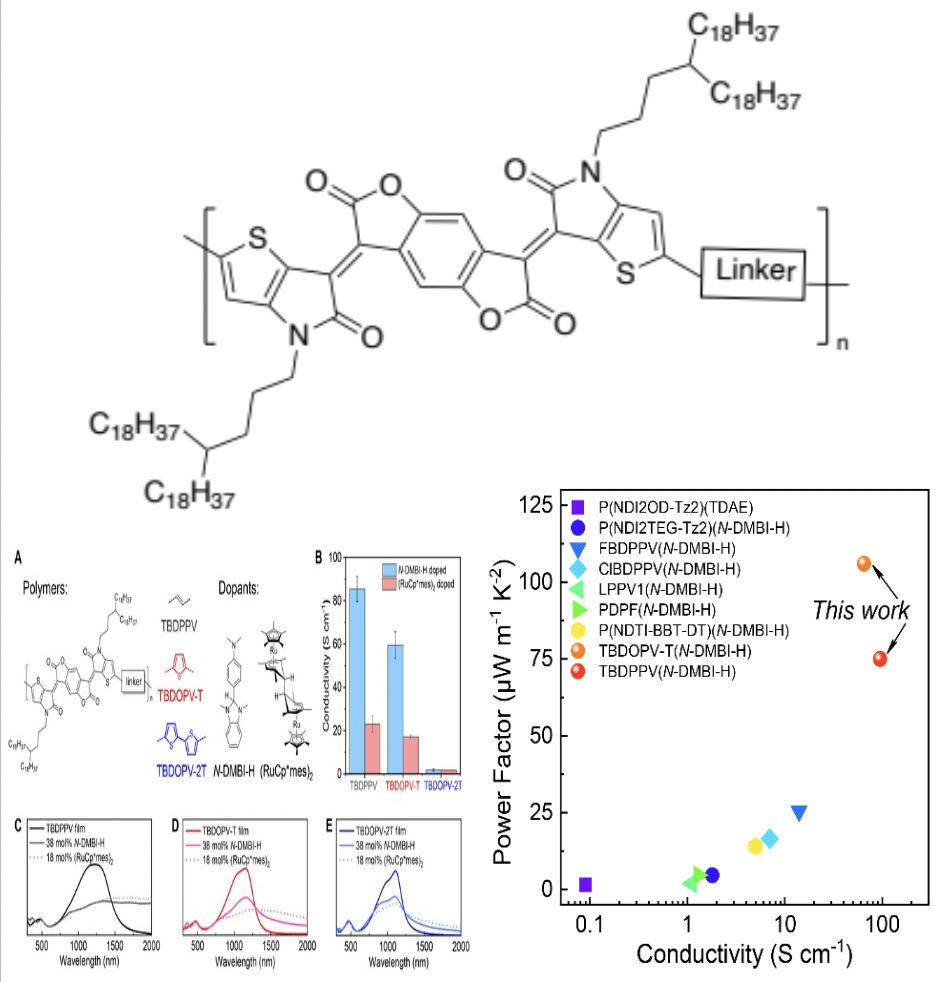
High Conductivity N-doped Polymers
Seth Marder and Carlos Silva (Georgia Tech.)
The Marder/Silva groups have been collaborating with Jian Pei’s group at Peking University on understanding the role of dopant on the electrical and thermal conductivities of n-dopable polymers.

Double Doping of Organic Semiconducting Polymers
Seth Marder (Georgia Tech.)
Molecular doping is a crucial tool for controlling the number of charge carriers in organic semiconductors, which in turn tunes the conductivity of the materials.

Photonic Funnels
Efficient optical coupling between nano- and macroscale areas is strongly suppressed by the diffraction limit. This work presents a possible solution to this fundamental problem via the experimental fabrication, characterization, and comprehensive theoretical analysis of structures referred to as ‘photonic funnels’.
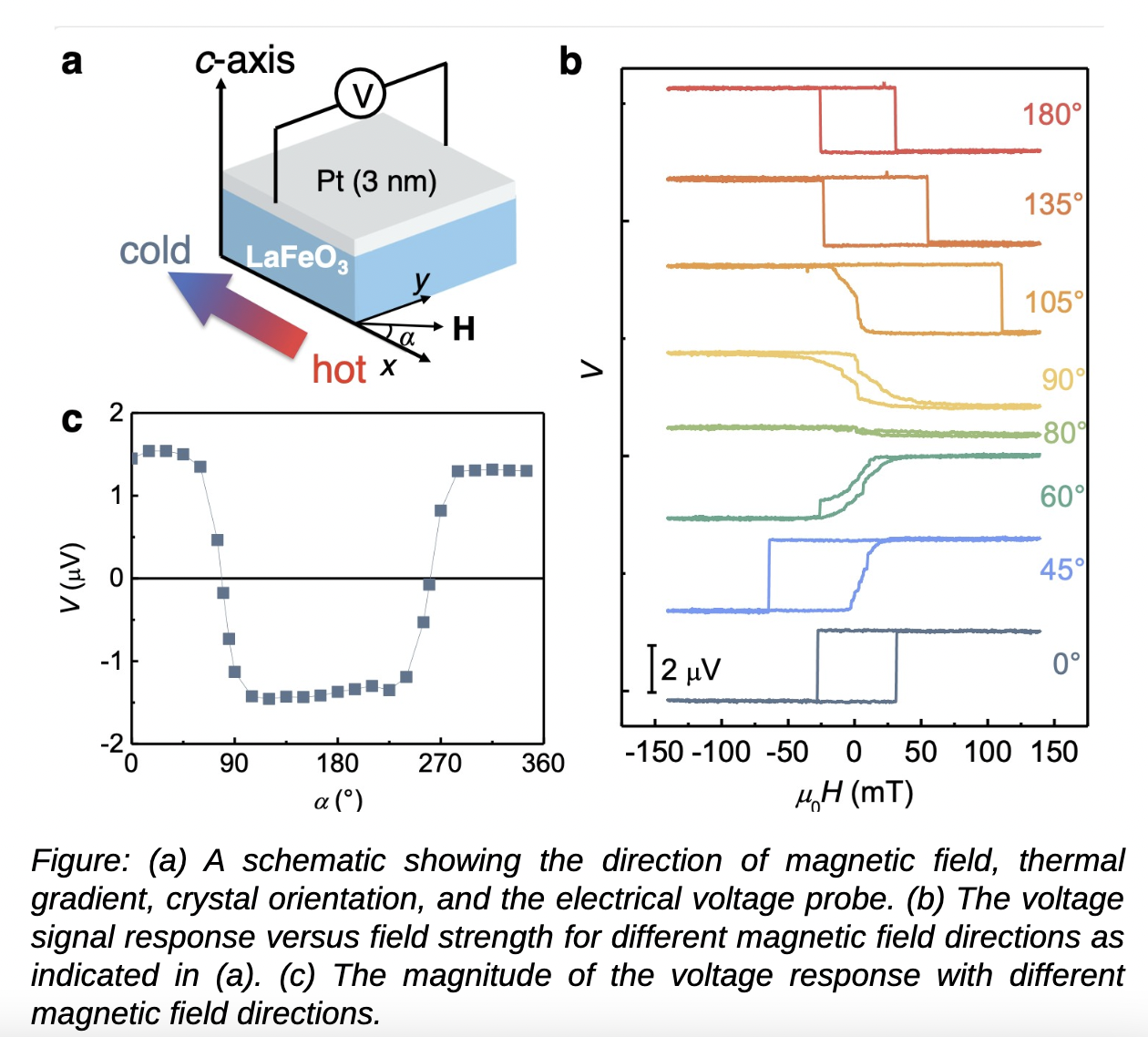
Evidence for Spin Swapping in an Antiferromagnet
J. Zhou (U. Texas-Austin); G. Fiete (Northeastern U.); C.L. Chien (Johns Hopkins U.)
In the past decades, climate change and an energy crisis have prompted researchers to focus on improving the efficiency of power-saving and energy conversion devices. Thermoelectric generation is a key materials-based idea with great potential in applications.
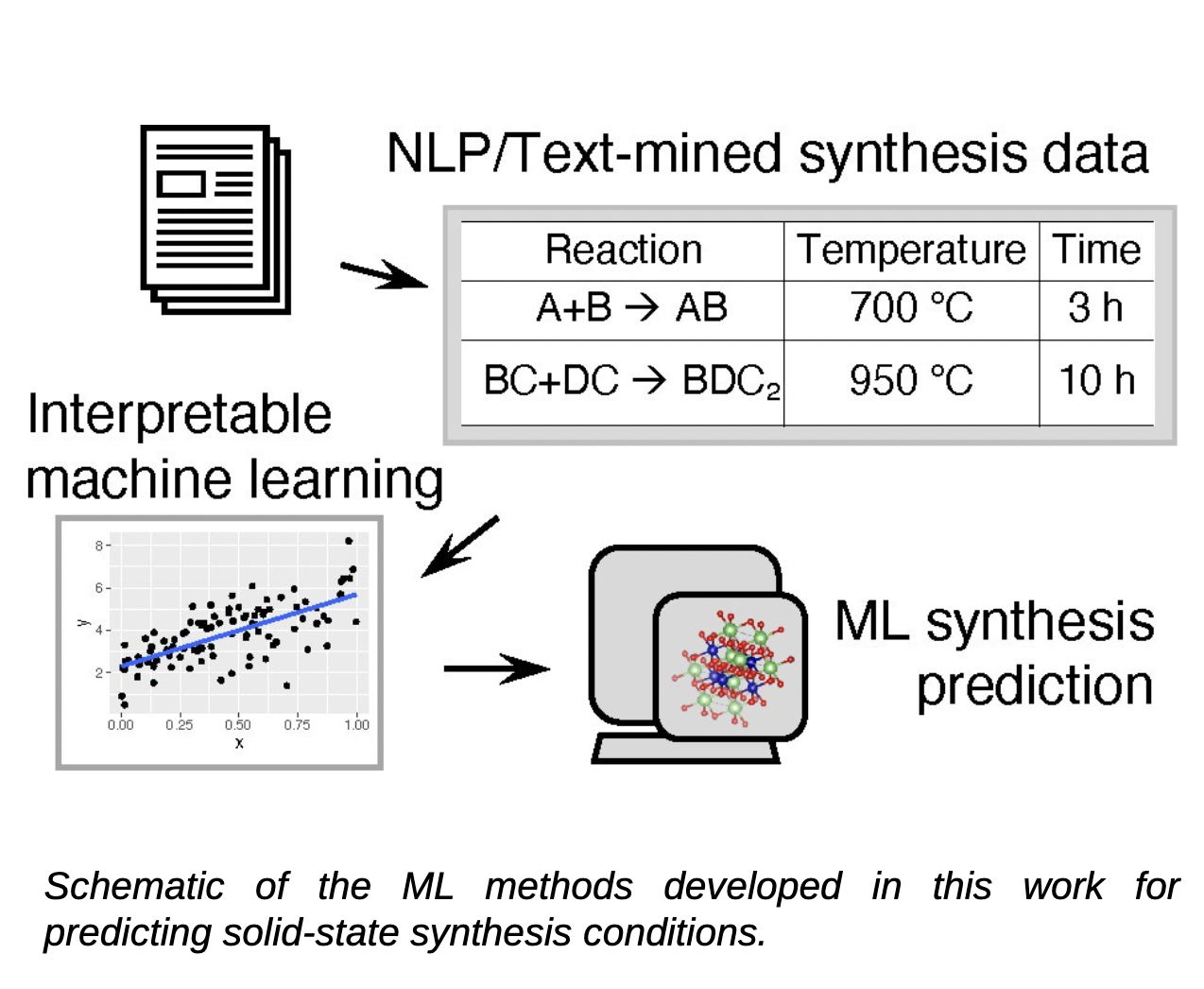
The Synthesis Genome: Data Mining for Synthesis of New Materials
Gerbrand Ceder, UC Berkeley
Interpretable machine-learning (ML) models were developed to predict two key solid-state synthesis conditions that must be specified for any reaction: heating temperature and heating time.
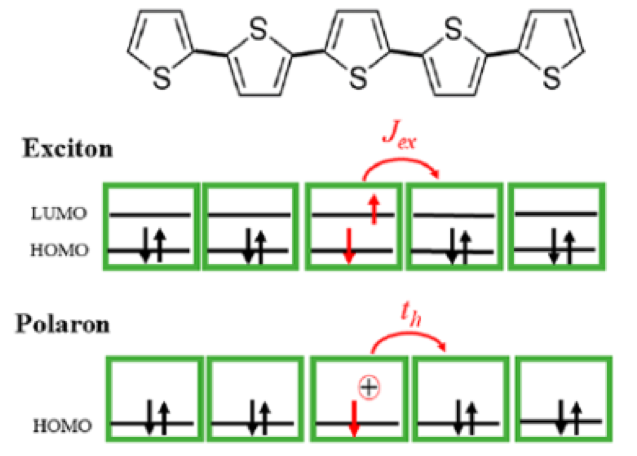
Excitons and Polarons in Organic Materials
In this effort, the DMREF team has developed a new theory for deciphering the features of the optical absorption spectra of conjugated polymers and organic aggregates.
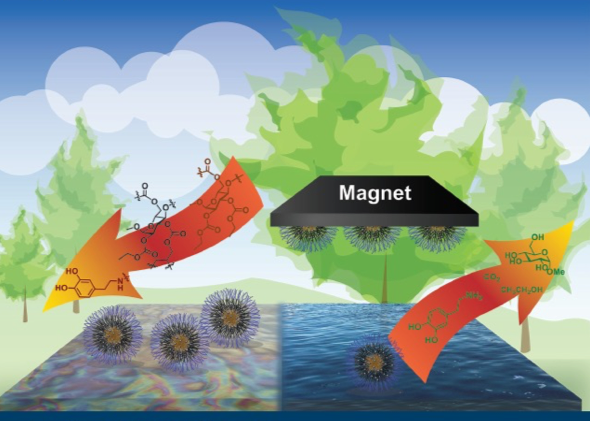
Recovery of Crude Oil from Aqueous Environments
A nanoscopic sugar-based magnetic hybrid material was designed that is capable of tackling environmental pollution posed by marine oil spills while minimizing potential secondary problems that may occur from microplastic contamination.
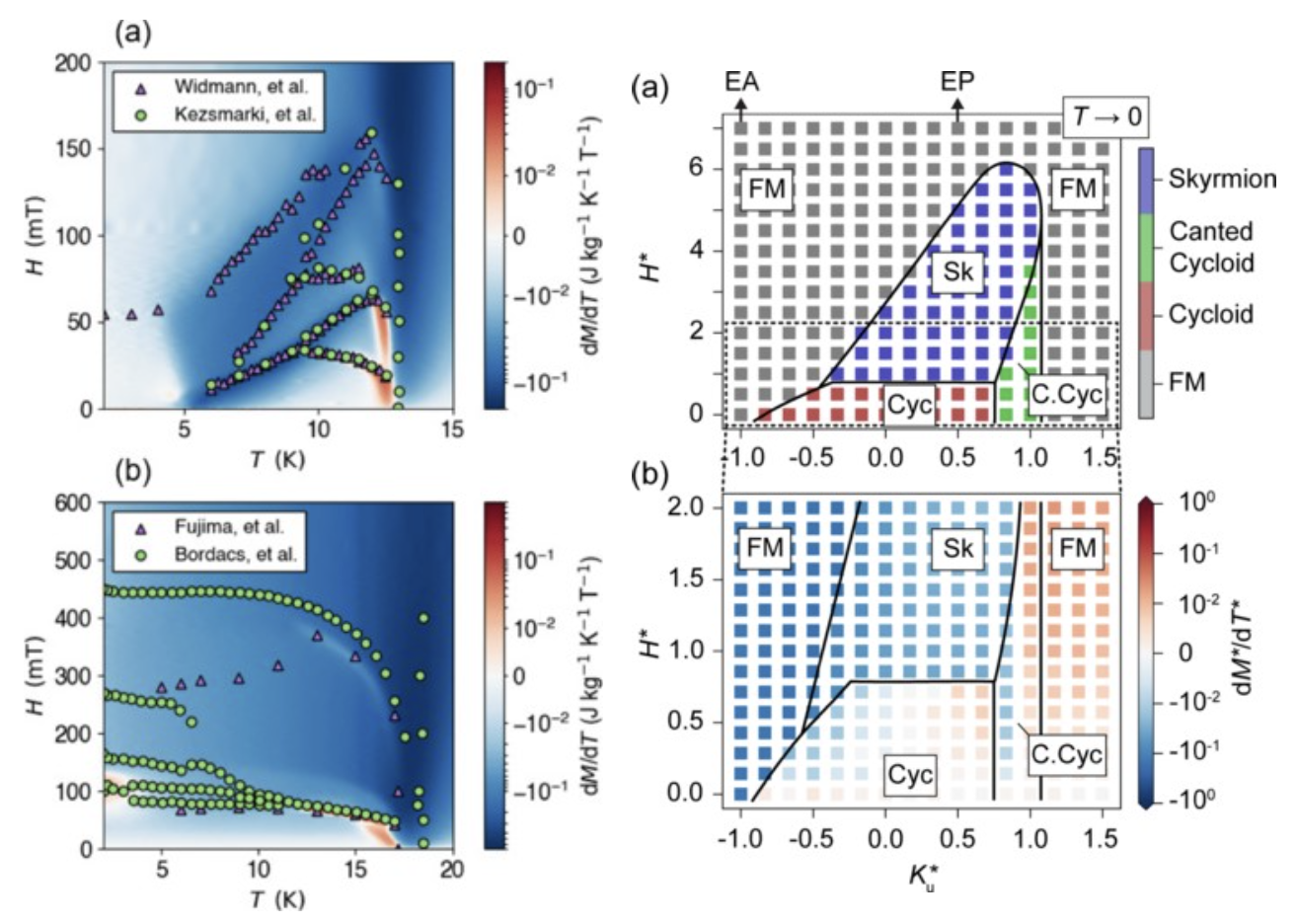
Magnetoentropic Mapping of GaV4S8 and GaV4Se8
Stephen Wilson and Ram Seshadri (UCSB)
The development of next-generation spintronic devices relies in a large part on engineering subtle magnetic phase transitions which control the formation of long-wavelength spin textures.
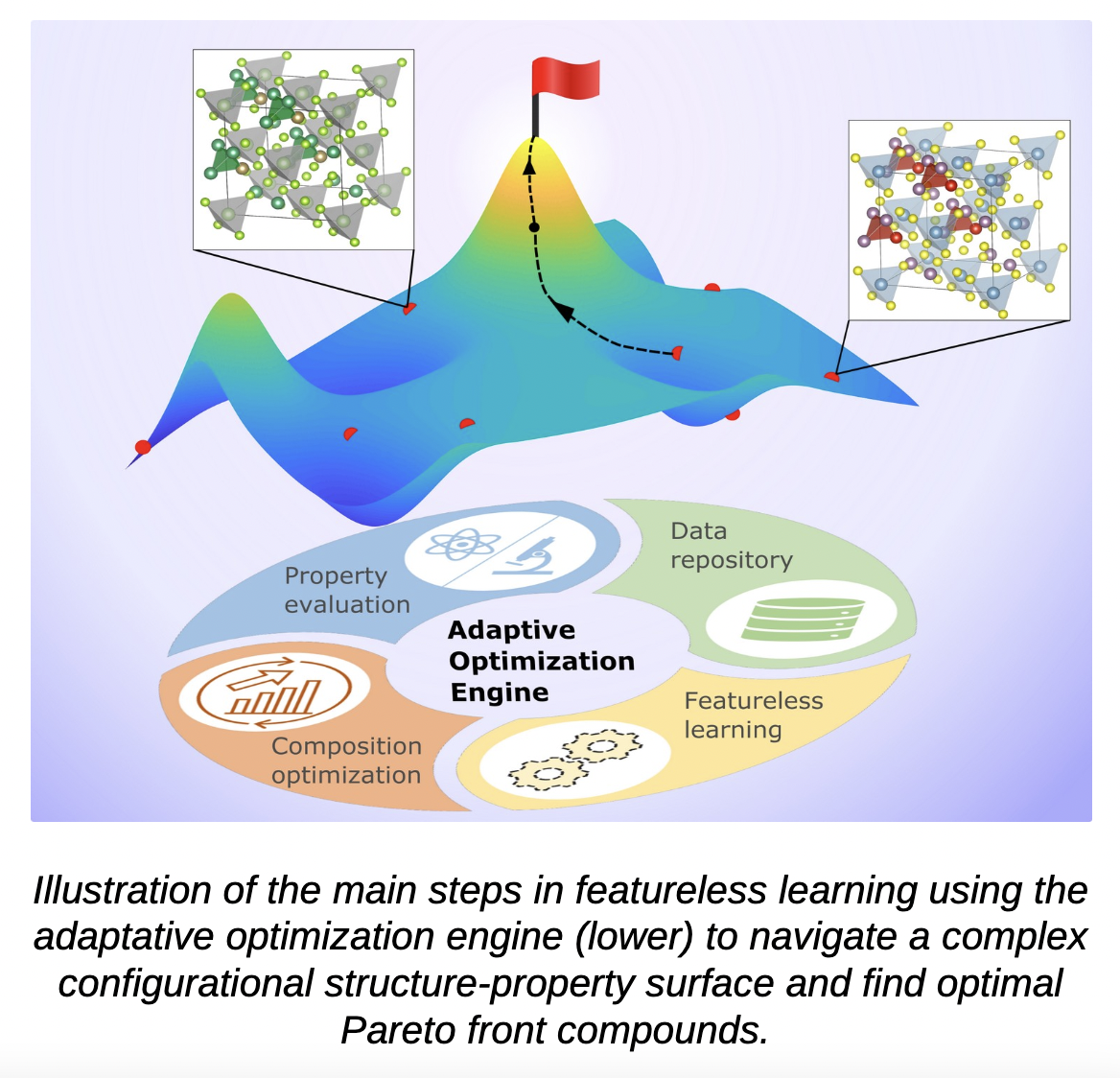
Featureless Optimization of Material Properties for Small Data Sets in Complex Ceramics
James Rondinelli (Northwestern University)
Electronic materials that exhibit phase transitions between metastable states (e.g., metal-insulator transition materials with abrupt electrical resistivity transformations) are challenging to decode. For these materials, conventional machine learning methods display limited predictive capability due to data scarcity and the absence of features that impede model training. In this work, we developed an adaptive optimization engine that overcomes these limitations
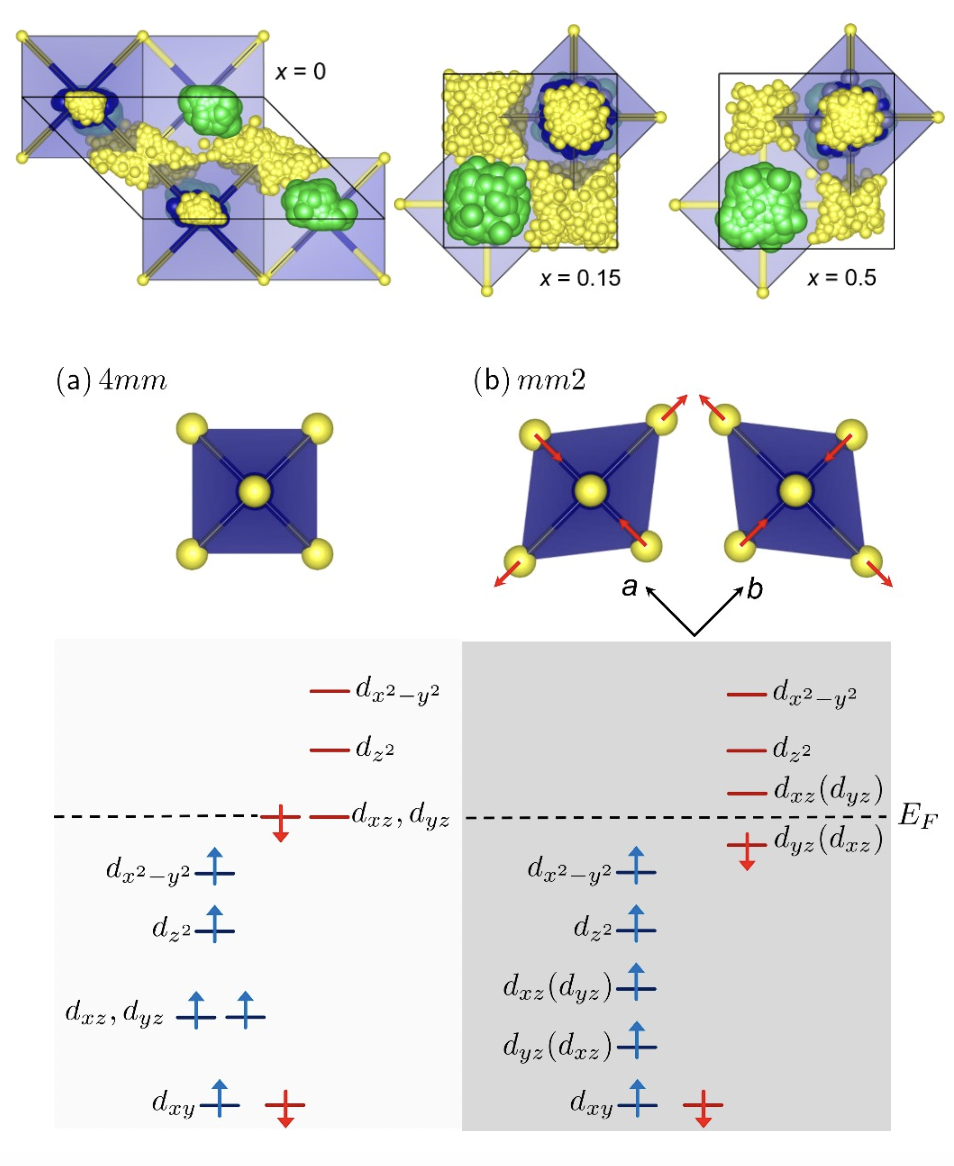
Structure Matters: Expanding the Origin of the Insulator-metal Transition in BaCo1-xNixS2
James Rondinelli (Northwestern University)Stephen Wilson and Ram Seshadri (UCSB)
We find that structural distortions play a pivotal role in the insulator-to-metal transition (IMT), in BaCo1-xNixS2despite the average structure remaining unchanged. We demonstrated that the Jahn-Teller (JT) effect, stemming from degenerate dxzand dyz orbitals sharing a single electron, is consistent with anomalous sulfide displacements observed in X-ray diffraction studies.
Showing 91 to 100 of 120