Conductive Organic-inorganic Nanostructures
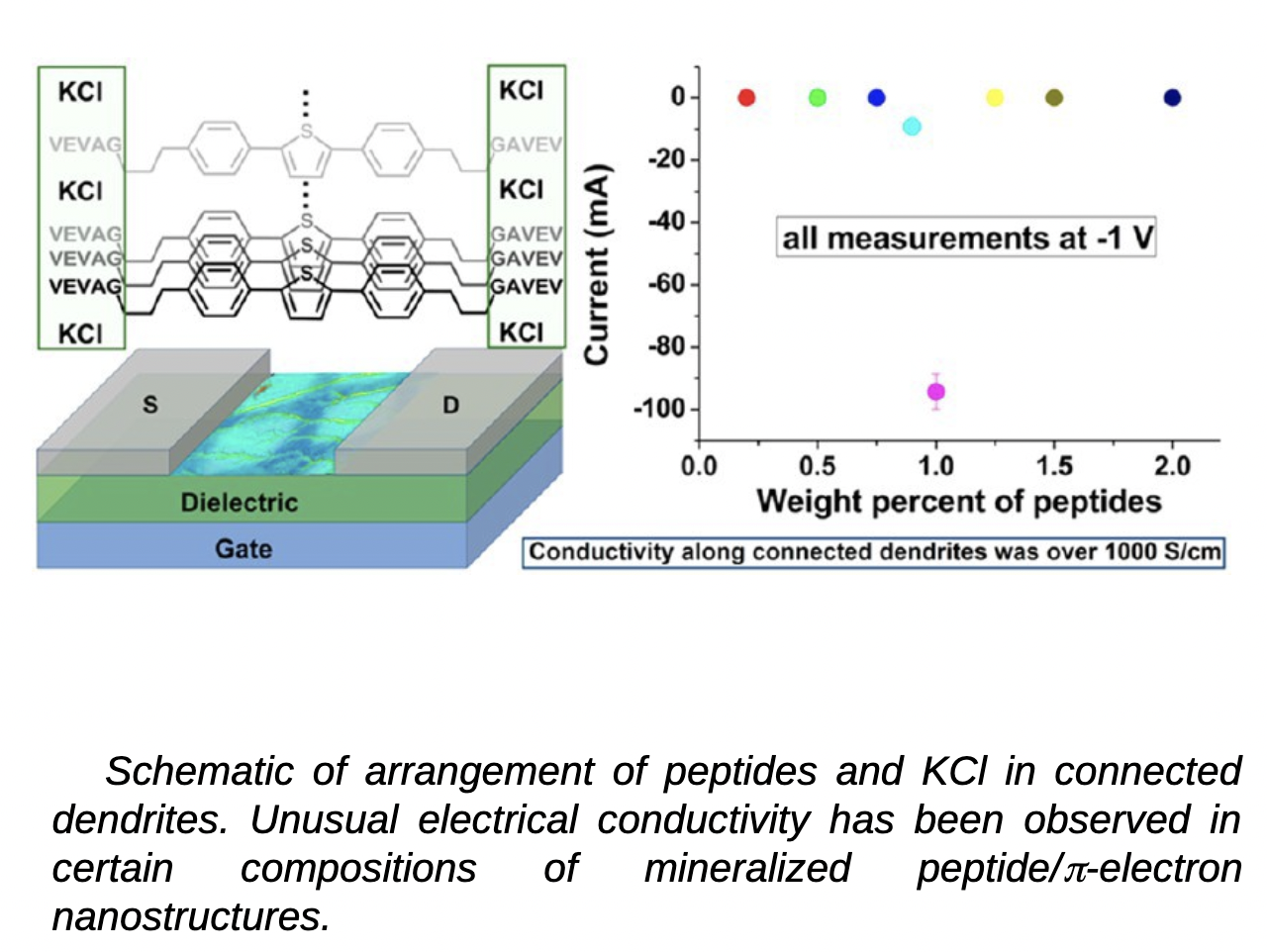
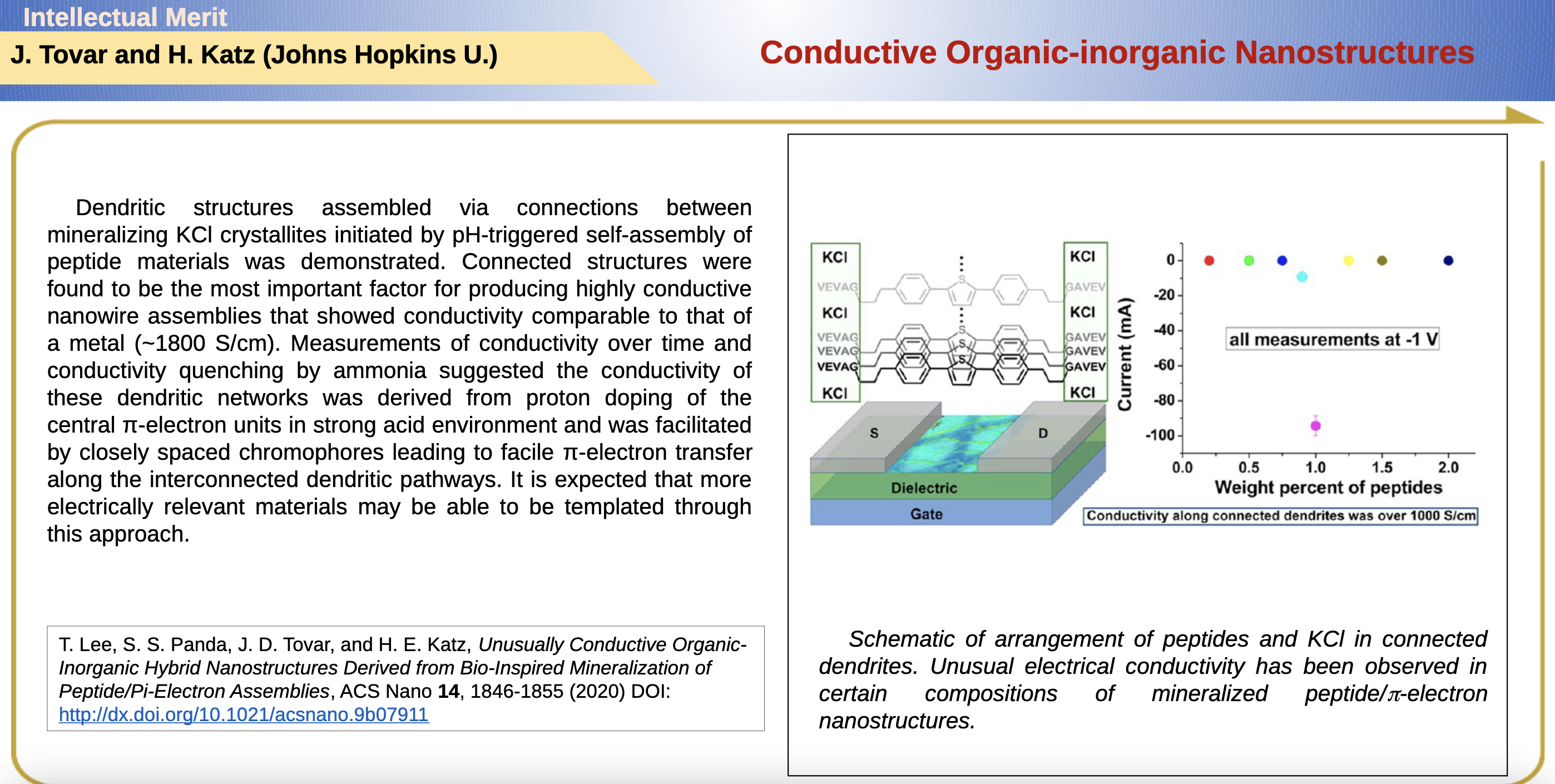
Dendritic structures assembled via connections between mineralizing KCl crystallites initiated by pH-triggered self-assembly of peptide materials was demonstrated. Connected structures were found to be the most important factor for producing highly conductive nanowire assemblies that showed conductivity comparable to that of a metal (~1800 S/cm). Measurements of conductivity over time and conductivity quenching by ammonia suggested the conductivity of these dendritic networks was derived from proton doping of the central π-electron units in strong acid environment and was facilitated by closely spaced chromophores leading to facile π-electron transfer along the interconnected dendritic pathways. It is expected that more electrically relevant materials may be able to be templated through this approach.