Broader Impact Highlights
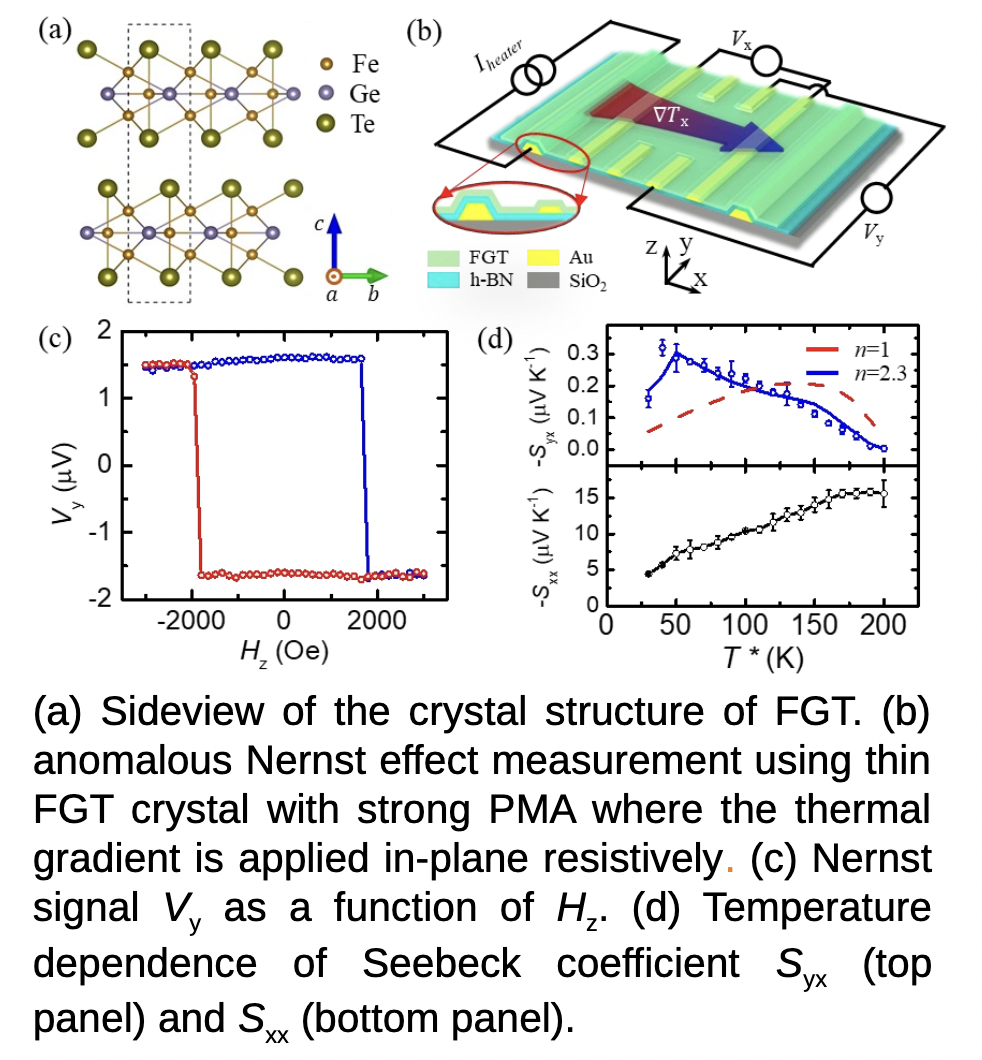
Large Anomalous Nernst Effect in a van der Waals Ferromagnet Fe3GeTe2
C. L. Chien (Johns Hopkins University)
Anomalous Nernst effect (ANE), a result of charge current driven by temperature gradient, provides a probe of the topological nature of materials due to its sensitivity to the Berry curvature near the Fermi level. Of particular interest is the ANE in topological materials because the special band topology in these materials could introduce a very large ANE.
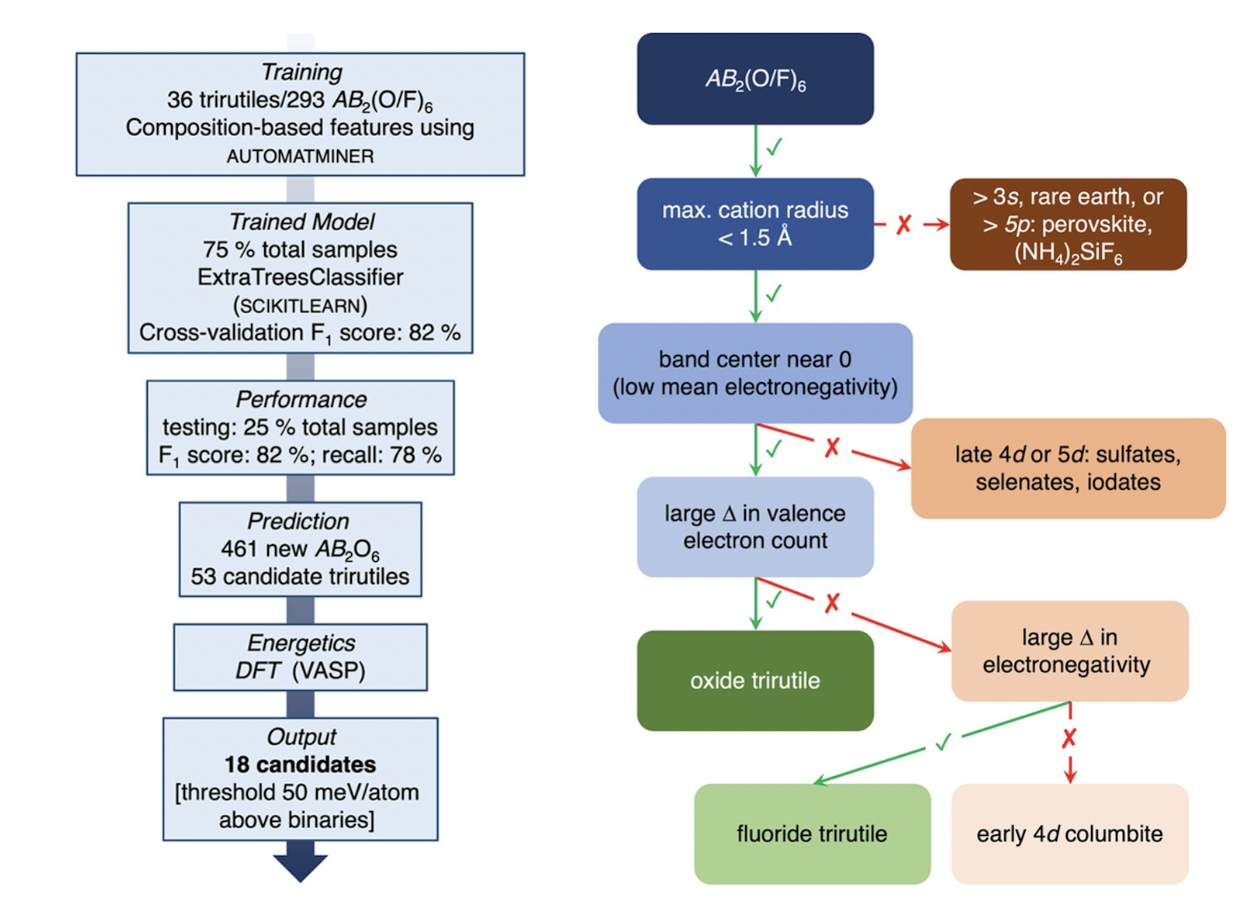
Learning Stability of AB2X6 Compounds to Guide Synthesis of Trirutile Oxides
James Rondinelli (Northwestern University)Stephen Wilson and Ram Seshadri (UCSB)
We used machine learning and density functional theory (DFT) simulations to study crystal structure formation in the AB2X6 oxide and fluoride composition space.
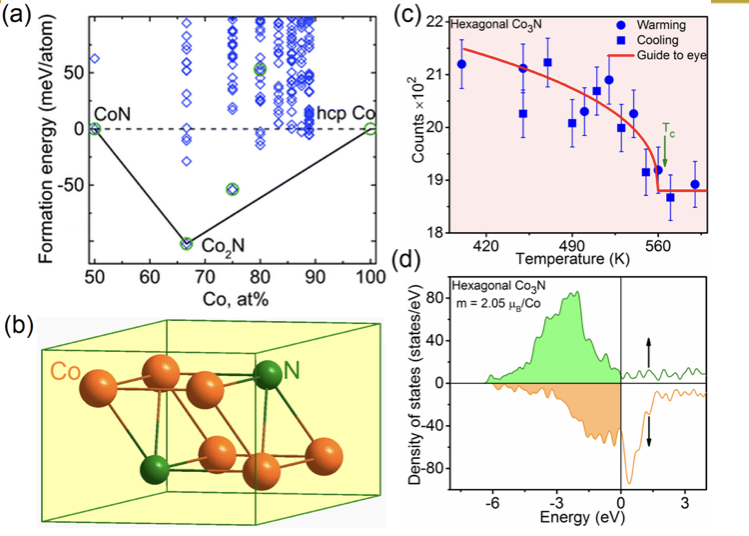
Creating Novel Magnetic Compounds with Complementary Experimental and Computational Methods
J. Chelikowsky, K. Ho, C. Wang, D. Sellmyer, X. Xu
The search for new magnetic materials with high saturation magnetic polarization (Js), magnetocrystalline anisotropy (K1), and Curie temperature (Tc) is important for a wide range of applications including information and energy processing.
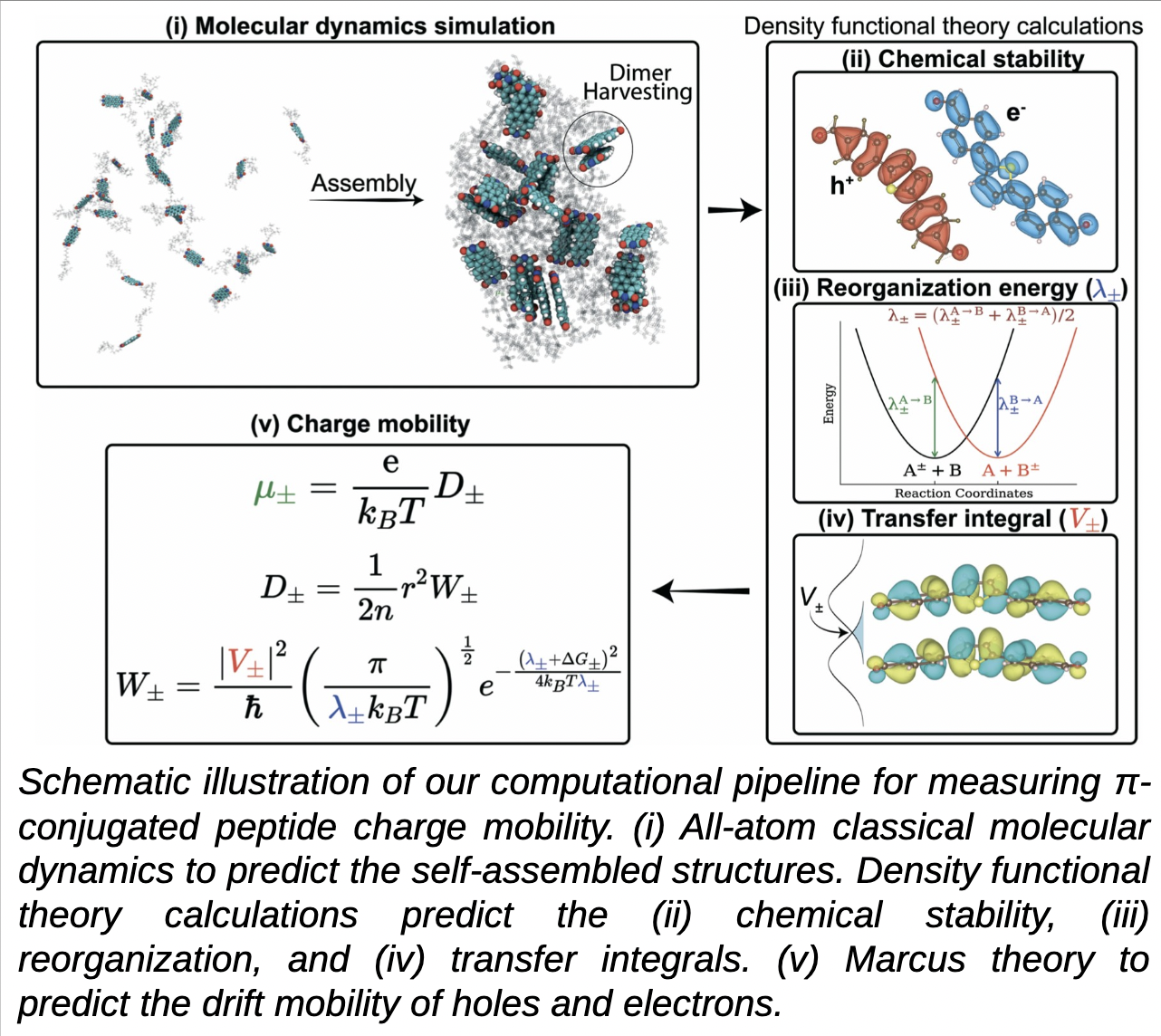
Self-assembled Peptide-p-electron Supramolecular Polymers for Bioinspired Energy Harvesting, Transport and Management
J. Tovar, H. Katz (Johns Hopkins U.)A. Ferguson (U. Chicago)
Organic electronics offer a route toward electronically active biocompatible soft materials capable of interfacing with biological and living systems. Discovering new organic molecules capable of high charge mobility is challenging due to the vast size of molecular design space and the multi-scale nature of charge transport that requires modeling electrons, molecules, and supramolecular assemblies.
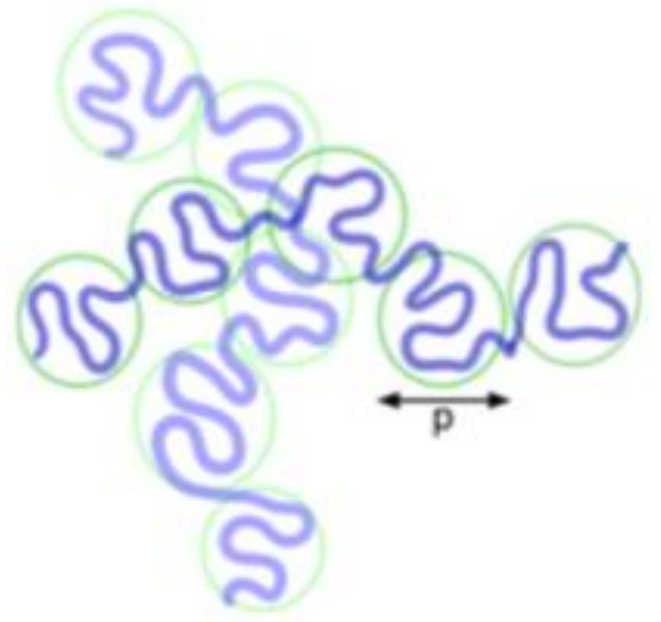
Predicting the Rubbery Response of Polymer Liquids
Our work describes how different kinds of polymer entangle. The key insight is simple to state intuitively: polymer chains entangle as often as they can, limited only by how often they can closely approach each other. We turn this deceptively simple statement into a unified scaling theory for different kinds of polymer fluids.
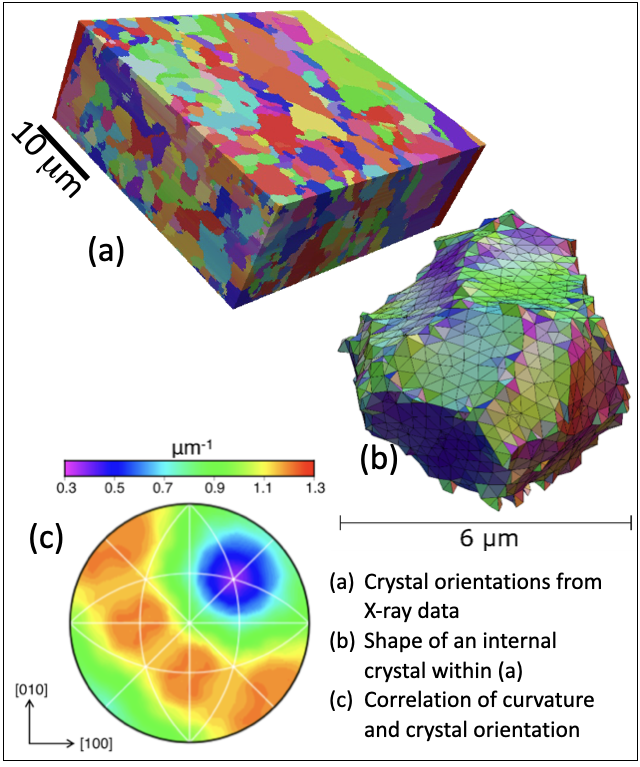
Crystallographic Distribution of Curvatures in Steel
How is the motion of an interface between two solid crystals related to its shape? This is a question that was impossible to address in the past because we were not able to see within solids
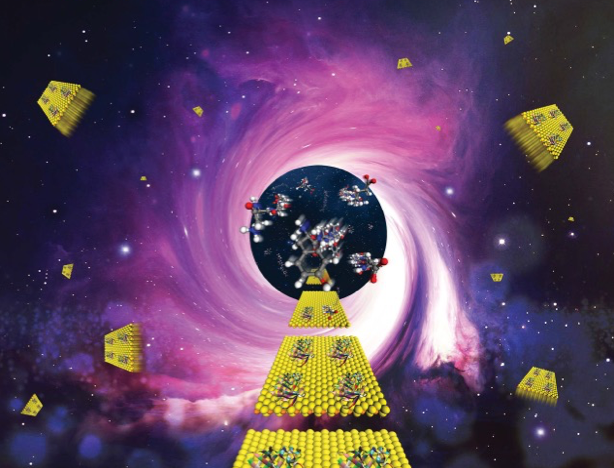
Interpretable Molecular Models for MoS2
MoS2 is a layered material with outstanding electrical and optical properties. Here, parameters for MoS2 with record accuracy are introduced, including validation and application to explain specific binding of peptides and amino acid residues.
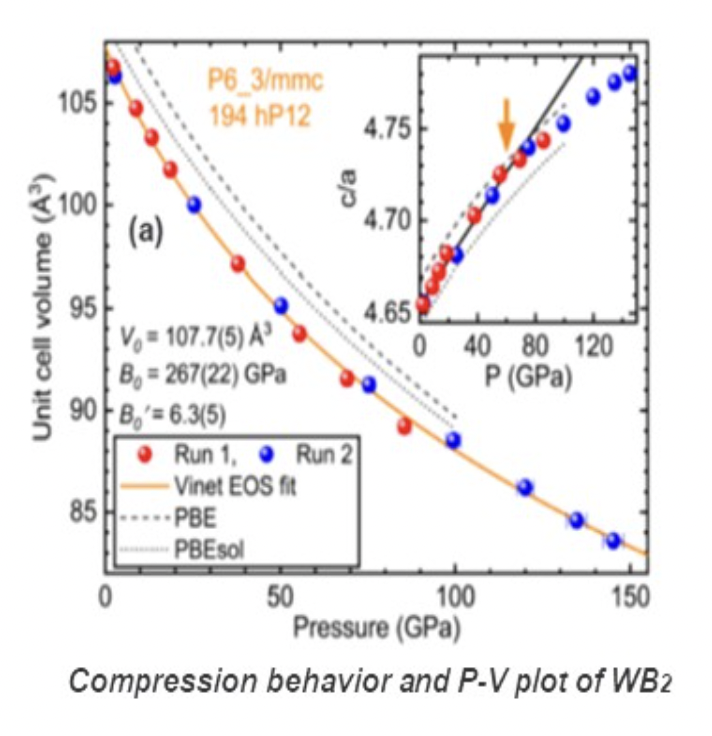
Ultrahard WB2 Superconducts under Pressure
R. Hemley (U. IL-Chicago)R. Hennig, J. Hamlin, P. Hirshfeld, G. Stewart (U. FL)
A unique combination of high-pressure structure and transport experiments, with crystal structure simulations has led to the discovery that ultrahard boride WB2becomes a superconductor under pressure.

Theory-guided Discovery of New Two-dimensional Metal-Chalcogenide Alloys with Exceptional Electrocatalytic Activity
We report the synthesis of new two-dimensional binary alloys of transition-metal dichalcogenides. Some of these alloys show outstanding performance as electrocatalyst in Li-air batteries and for the reduction of CO2.
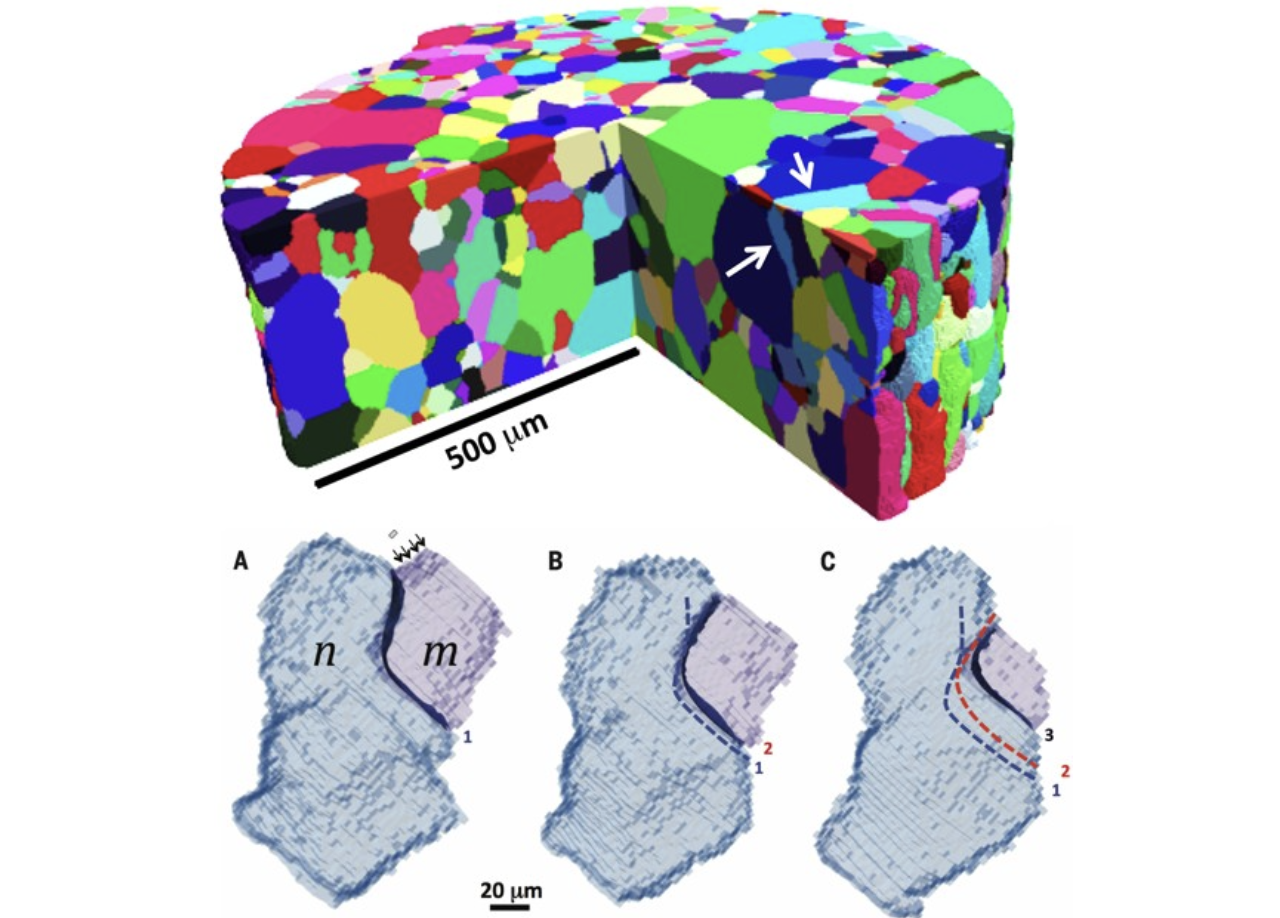
Grain Boundary Velocity and Curvature are Not Correlated
Gregory Rohrer , Robert Suter
To the eye, most common metals and ceramics used in commercial products appear to be uniformly solid. But at the microscopic level, they are polycrystalline, made up of aggregates of grains that have different sizes, shapes, and crystal orientations.
Showing 71 to 80 of 120