DMREF Specific Highlights
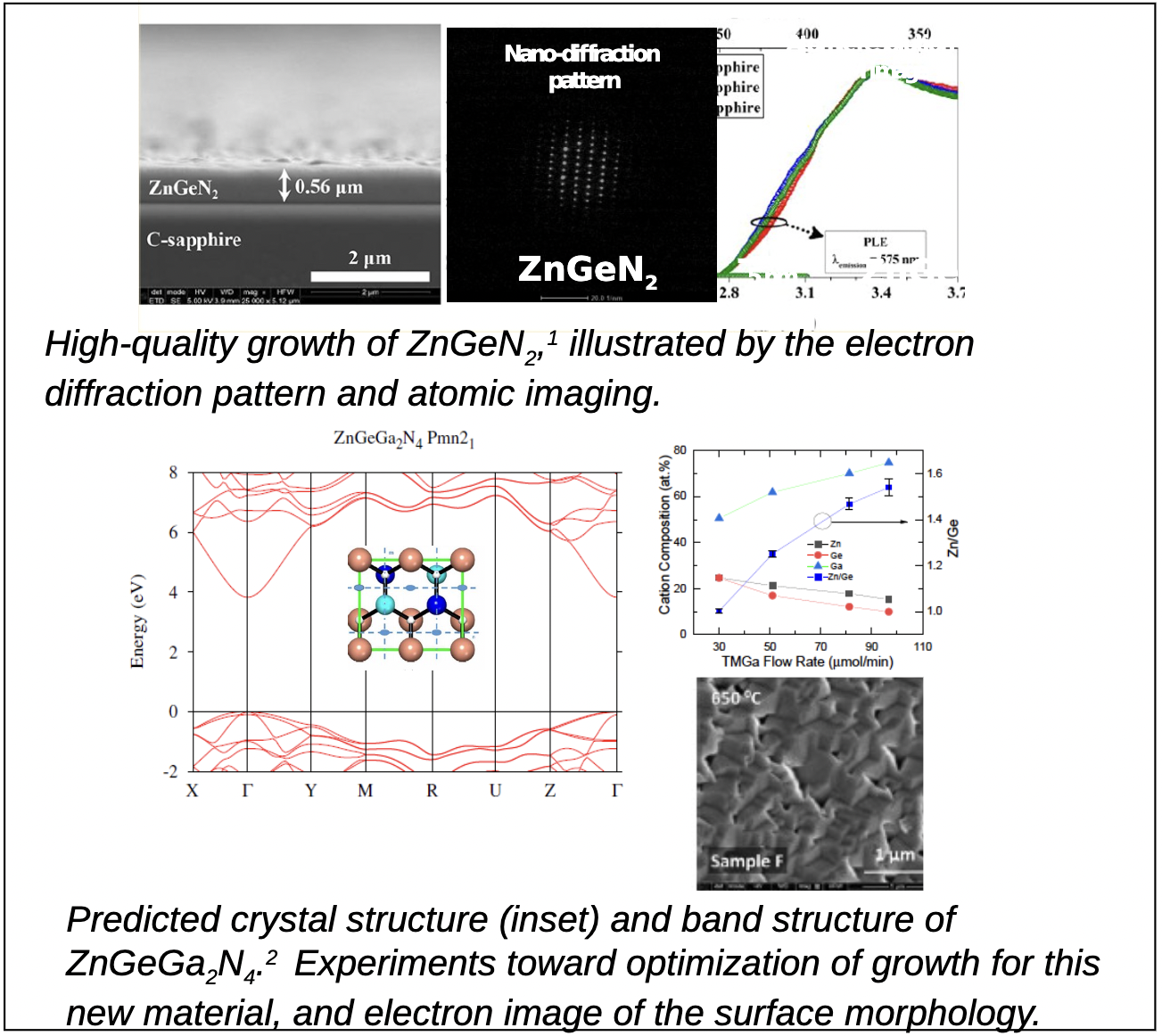
MOVCD of Complex Nitride Semiconductors
K. Kash, W. Lambrecht, H. Zhao
A unique, custom-designed research instrument for metal-organic chemical vapor deposition (MOCVD) is enabling the synthesis and study of complex nitride semiconductors, such as ZnGeN21, and alloys and heterostructures of these materials, alone and in combination with the binary nitrides (Al,Ga,In)
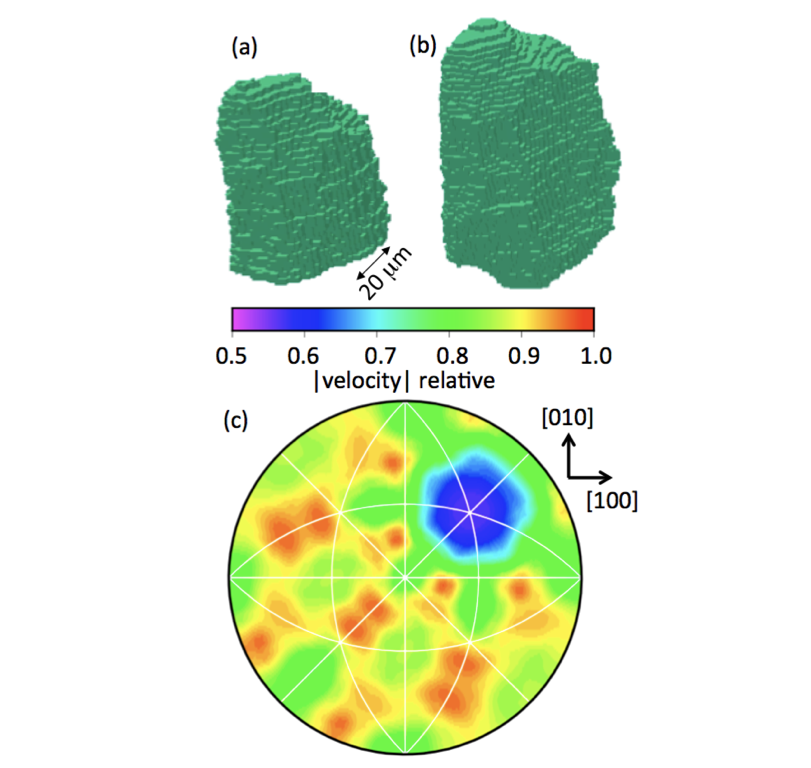
Grain Boundary Velocity Distributions
Gregory Rohrer, Robert Suter
Polycrystalline metals and ceramics are opaque to most forms of radiation. Because of this, it has not been possible to observe the motion of grain boundaries within a polycrystalline network.
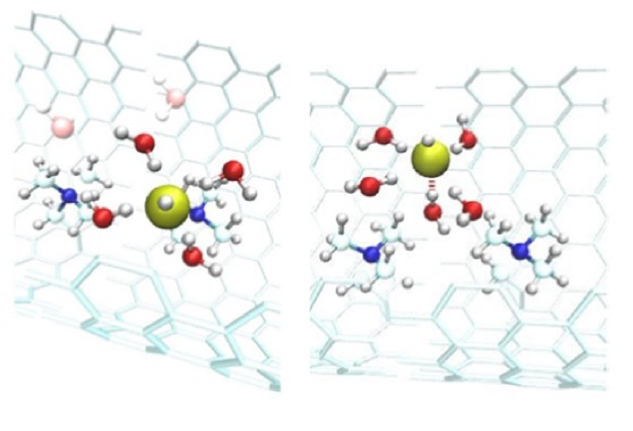
Hydroxide Diffusion in Anion Exchange Membranes
The development of reliable, cost-effective polymer architectures for use as anion exchange membranes (AEMs) is an important challenge facing emerging electrochemical device technologies.
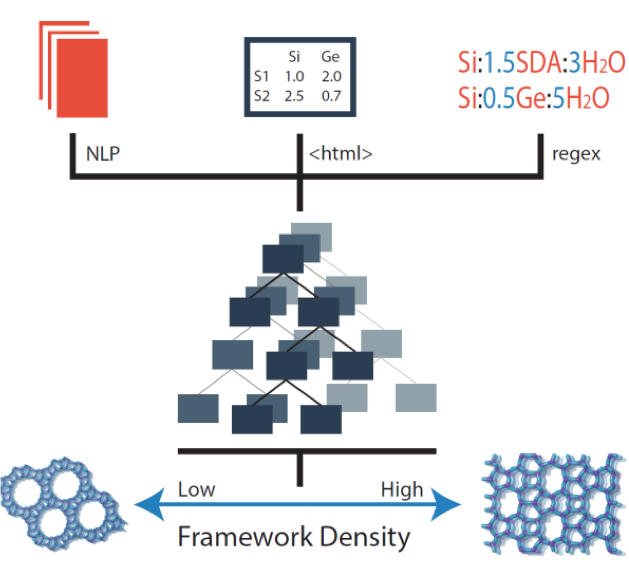
Informing Zeolite Synthesis Enabled by Natural Language Processing
We have built an automated way to extract and combine body text and table information from published literature on the synthesis of zeolites, an industrially significant catalyst material. These tools are important as they move the field closer to the ability to predict and design synthesis routes for zeolites.
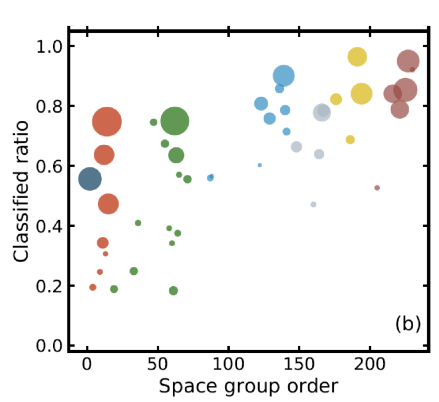
Data-mining our Way to Better Nanoparticle Structures
Taking inspiration from genomics based data-mining approaches, we showed how large databases of candidate structures can be generated algorithmically and then mined efficiently and robustly to screen for candidate nanoparticle structures.
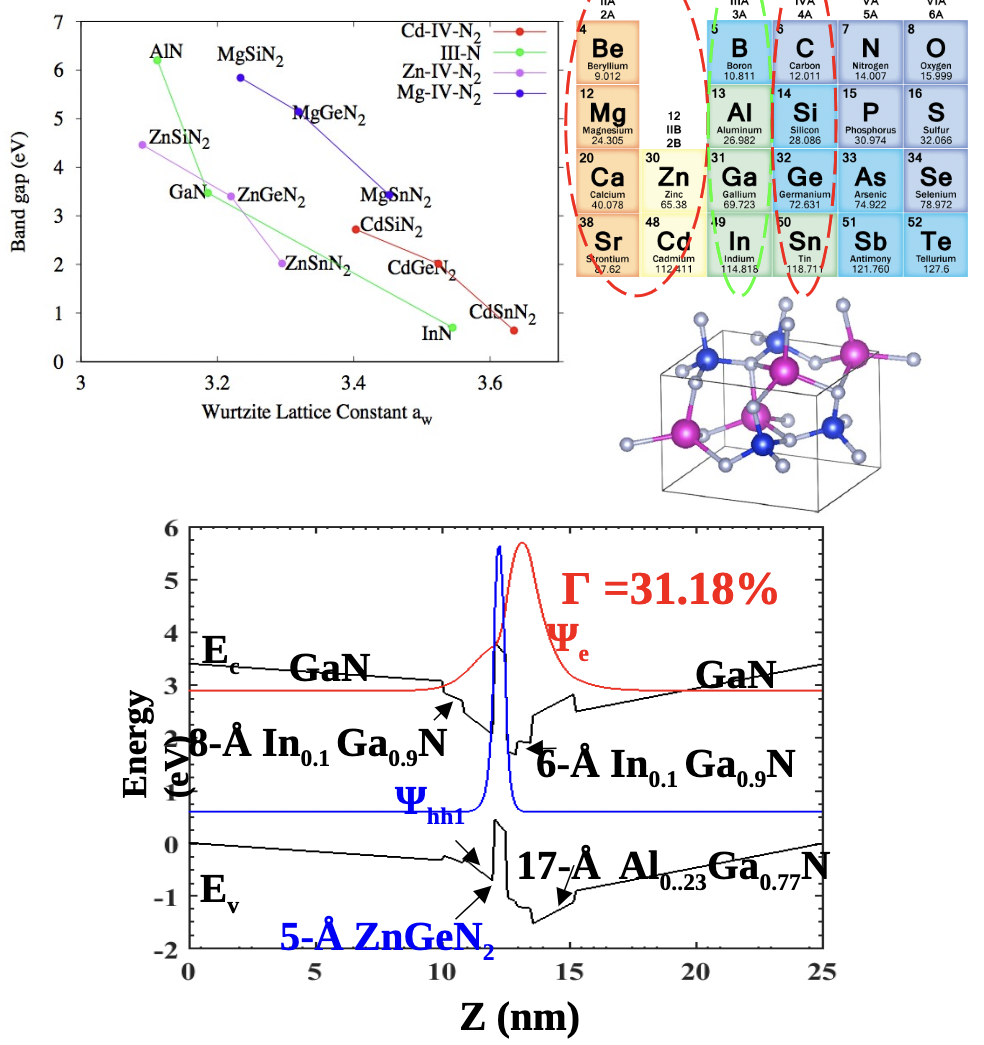
Nitride Semiconductor’s Family Expanded
K. Kash, H. Zhao, W. Lambrecht
The group III-nitrides (Al,Ga,In)N form the basis for the white LED lighting revolution, honored with the Nobel Prize in Physics in 2014.
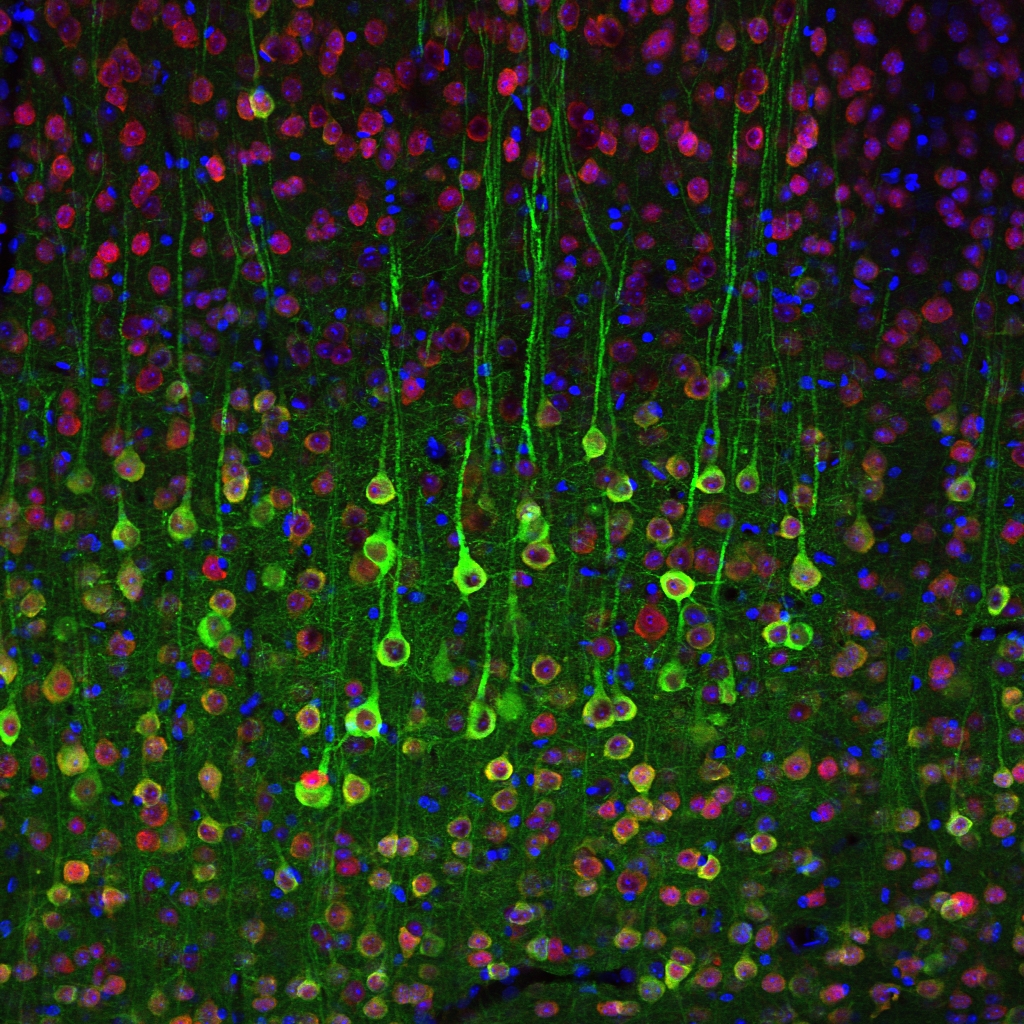

Data Science Uncovers Key Polymer Device Process Parameter
A dataset comprising processing information and performance metrics associated with 15 DPP-DTT based OFET devices from 15 publications was curated and analyzed.Data science guided the construction of a structure-property relationship.
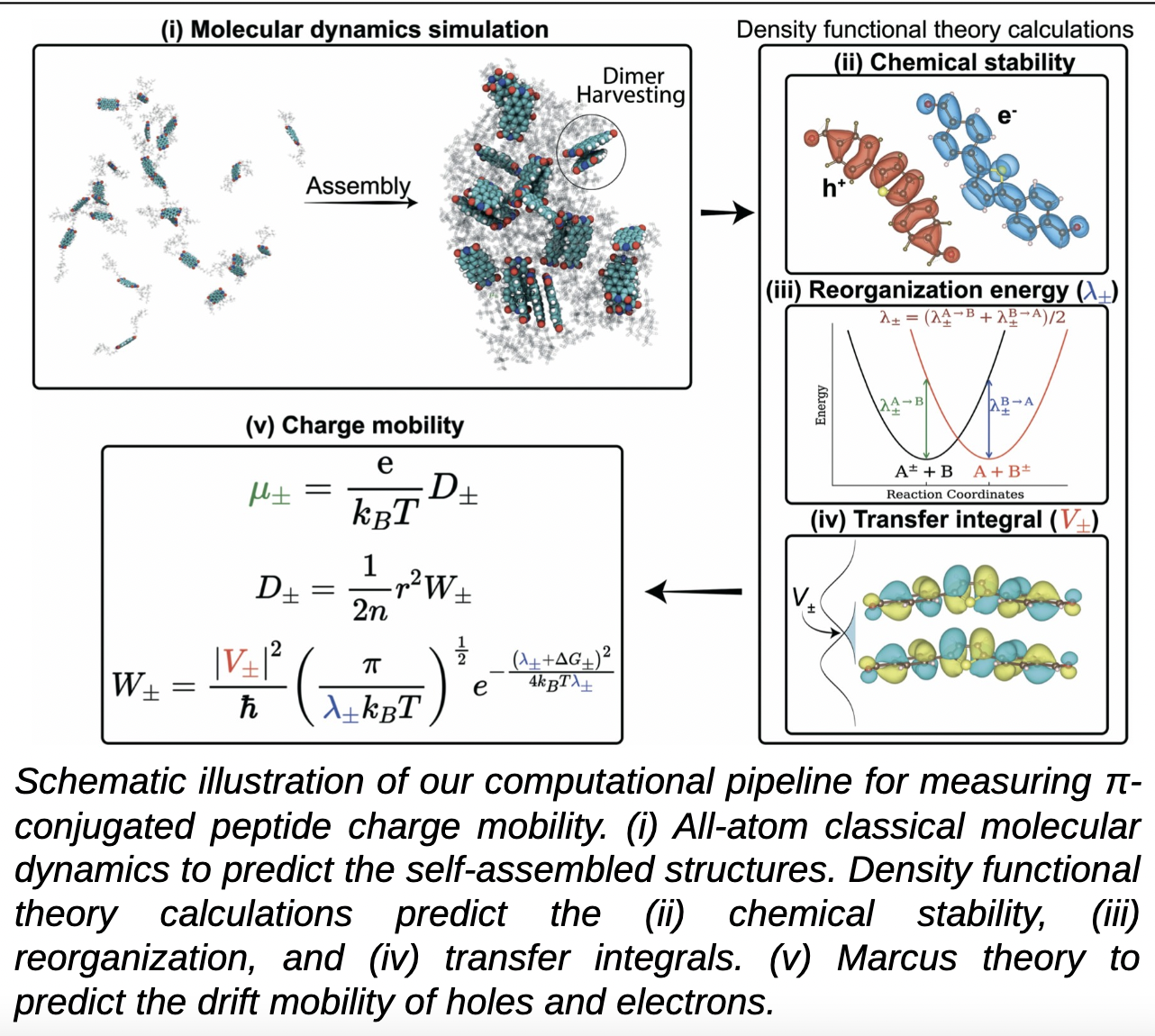
Self-assembled peptide-pi-electron supramolecular polymers for bioinspired energy harvesting, transport and management
Andrew Ferguson
Organic electronics offer a route toward electronically active biocompatible soft materials capable of interfacing with biological and living systems. Discovering new organic molecules capable of high charge mobility is challenging due to the vast size of molecular design space and the multi-scale nature of charge transport that requires modeling electrons, molecules, and supramolecular assemblies.
Showing 81 to 90 of 120