DMREF Specific Highlights
Native Point Defects and Doping in ZnGeN2
4/11/2016 | D. Skachkov, A. P. Jaroenjittichai, L. Y. Huang, W. R. L. Lambrecht
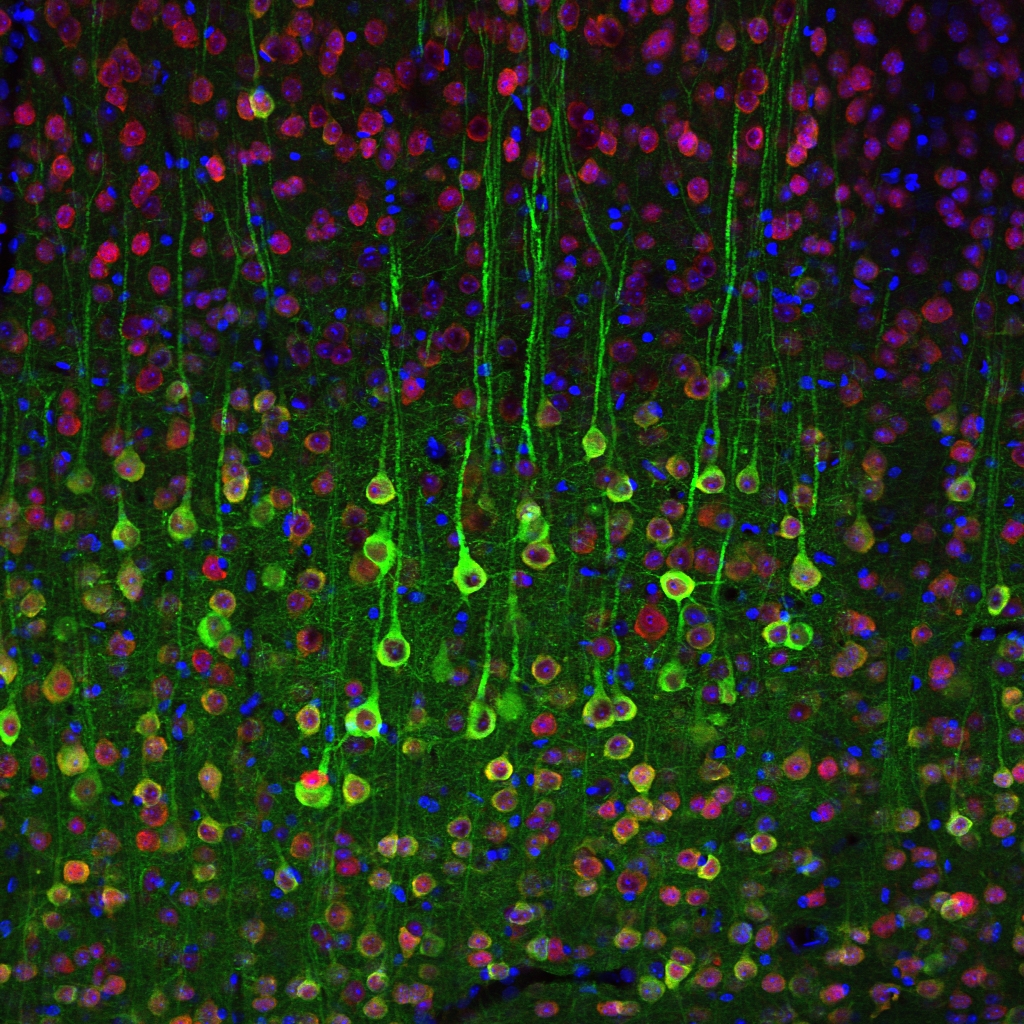
Data Driven Discovery of Conjugated Polyelectrolytes for Neuromorphic Computing
Gang Lu & Xu Zhang (California State University Northridge) Thuc-Quyen Nguyen & Guillermo Bazan (UCSB)
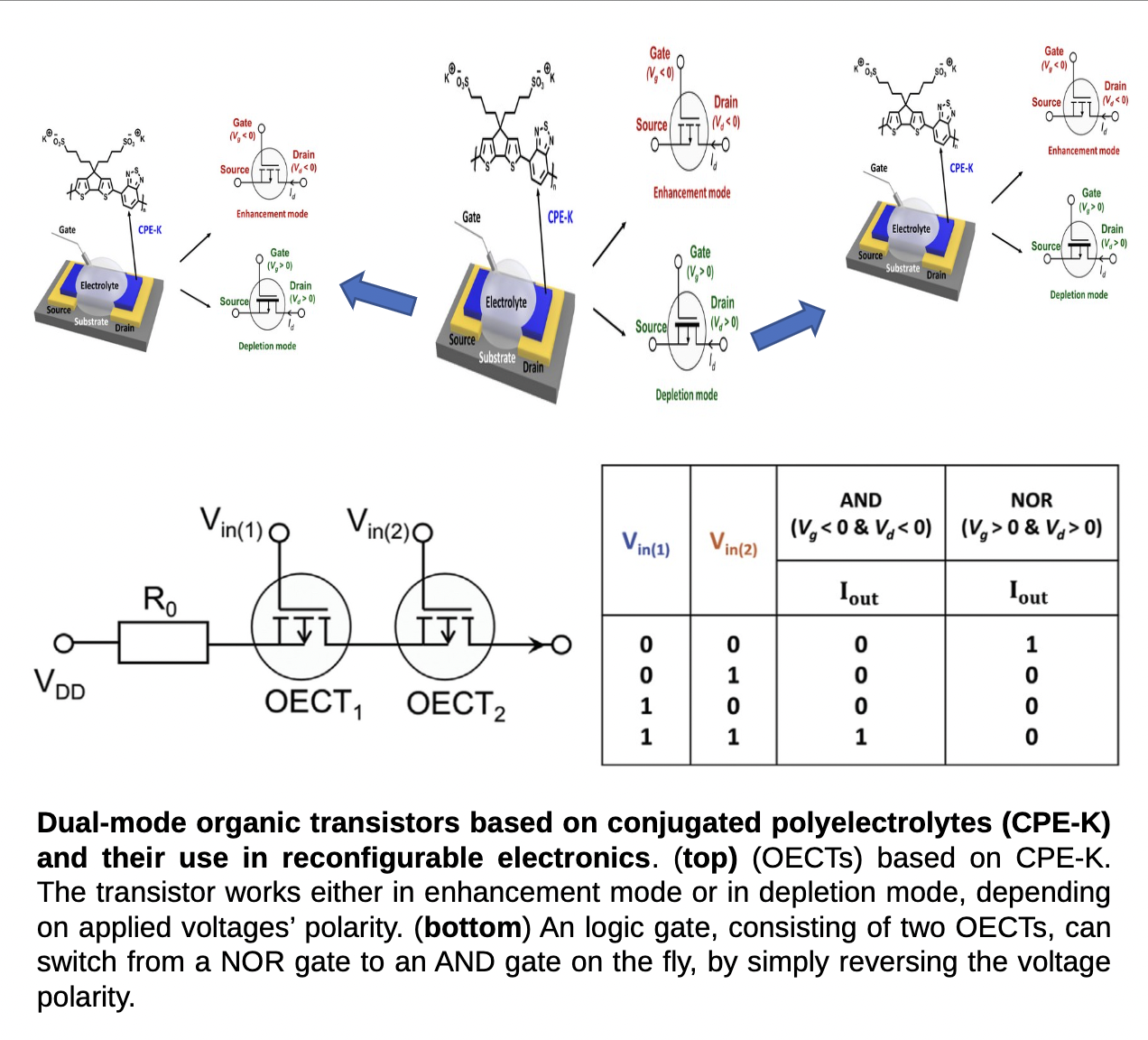
Dual mode transistors, the type of transistors that work in both depletion mode and enhancement mode, were reported more than 50 years ago using inorganic semiconductors, such as Silicon, but have not been shown in organic electronics
A New Pathway to Stable, Low-cost, Flexible Electronics
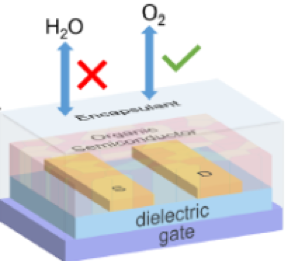
While progress in material and device design has been astonishing, low environmental and operational stabilities remain longstanding problems obstructing their immediate deployment in real world applications.
Machine-assisted Discovery of Polymer-enzyme Complexes for Sustained Neural Regeneration
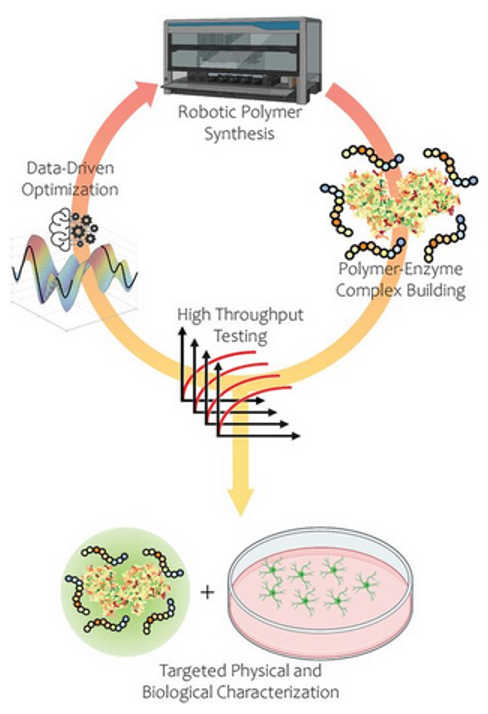
Among the many molecules that contribute to glial scarring, chondroitin sulfate proteoglycans (CSPGs) are known to be potent inhibitors of neuronal regeneration. Chondroitinase ABC (ChABC) degrades the glycosaminoglycan (GAG) side chains of CSPGs and promotes tissue regeneration. However, ChABC is thermally unstable and loses all activity within a few hours at 37 °C.
Reverse Engineering of Materials Properties
Gregory Payne and William Bentley
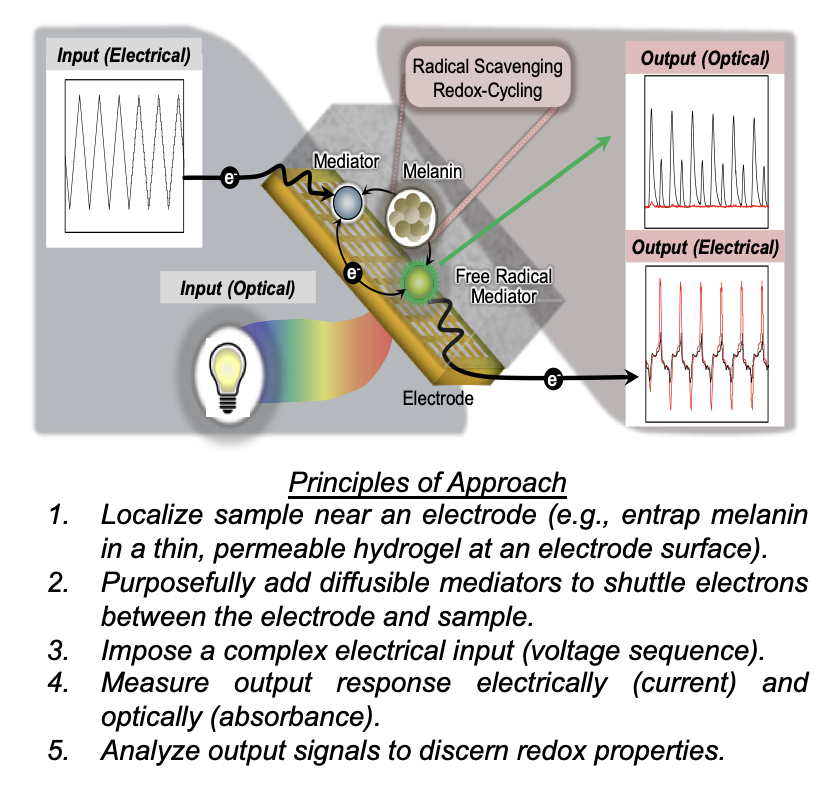
Traditional materials science approaches to characterize materials from nature or to develop new polymeric materials start by resolving chemical structure. Yet this approach fails for materials that have complex and ill-defined structures or that undergo dynamic changes as part of their function. This is the case for melanin a ubiquitous pigment in nature that is believed to offer protective antioxidant and radical scavenging properties.
Elucidating Salt Effects on Chitosan Dynamics
Gregory Payne and Jana Shen
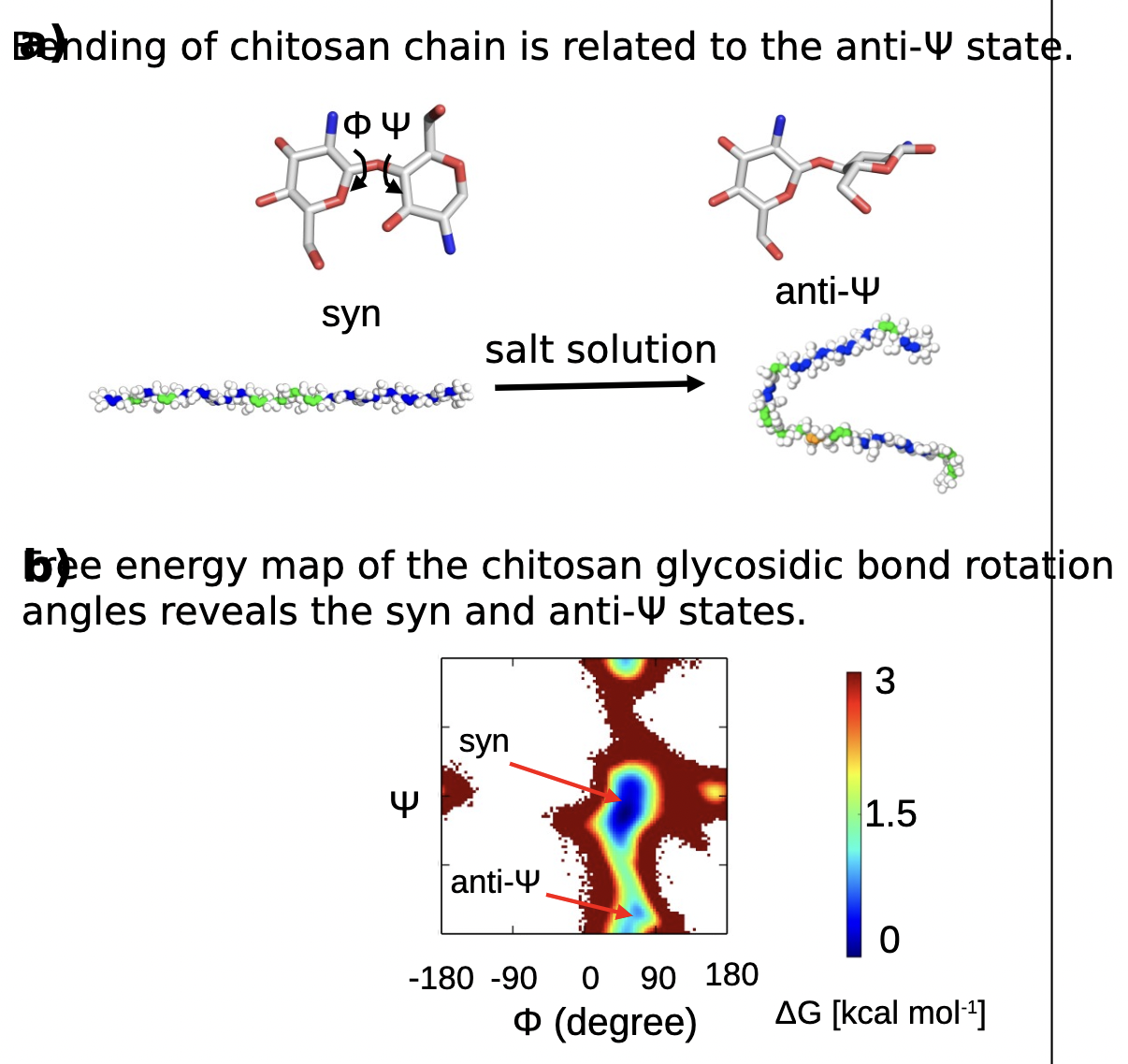
Using molecular dynamics simulations, we explored the solution salt effect on the conformational dynamics of chitosan chains. Our data revealed that the chitosan glycosidic bonds can rotate to an extended syn and the so-called anti-Ψ conformations.
Extending Reverse Engineering to Biology
Gregory Payne and William Bentley
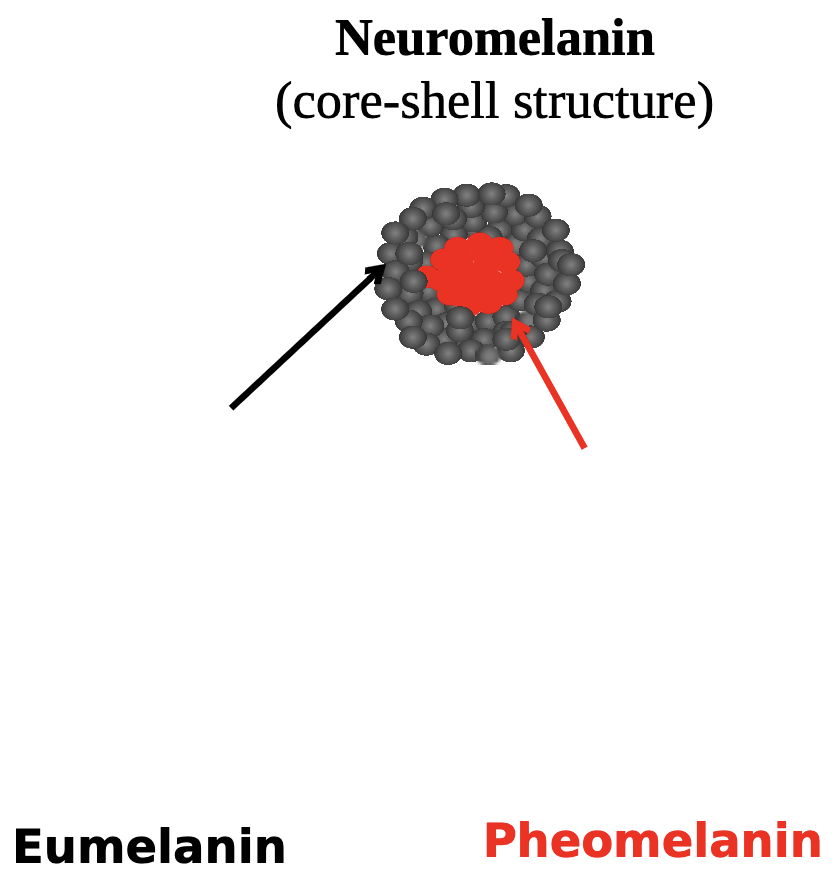
In our research, we are developing novel experimental methods to characterize the redox-properties of our thin films. These characterization methods can also be extended to probe the properties of biological materials.

Resolving Order in Ternary Semiconductors via Resonant X-ray Diffraction
By effectively characterizing the cation site order in ZnGeP2, we have demonstrated an example of the tunability of properties in II-IV-V2 materials at nearly fixed lattice parameters—making these materials promising for integration into current technologies. This could have a beneficial impact on devices such as LEDs and solar cells.
A Neural Network Approach for Catalysis
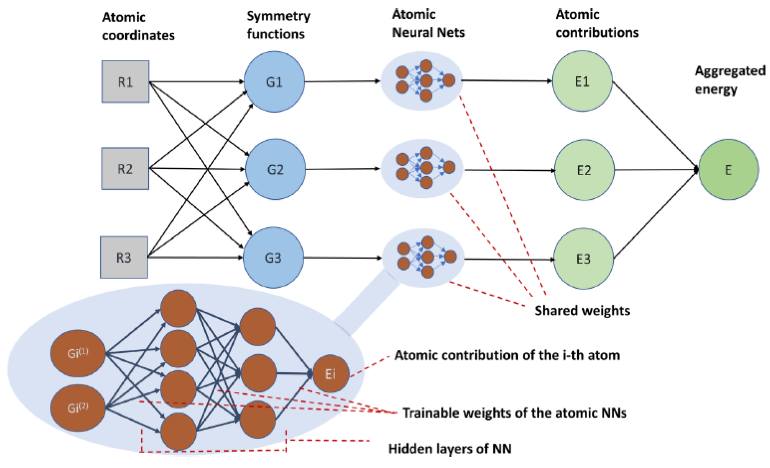
A neural network predictive model has been developed that combines an established additive atomic contribution-based model with the concepts of a convolutional neural network that, when extrapolating, achieves a statistically significant improvement over the previous models.
Computationally Driven Genetically Engineered Materials
J. Montclare, R. Bonneau, Y. Wadghiri (NYU)
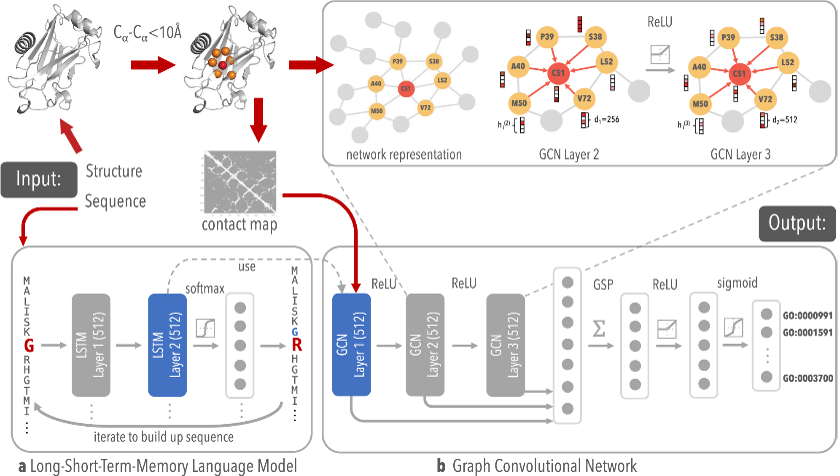
Development of protein biomaterials that are capable of self-assembly into hydrogels has potential in biomedical applications including drug delivery and tissue engineering. A two-stage architecture, called DeepFRI, has been recently developed where functional salinity is established by training its algorithm on annotated structures from PDB and SWISS-MODEL and applying weighted class activation mapping of residues that are critical to function.
Showing 51 to 60 of 120