Research Highlights
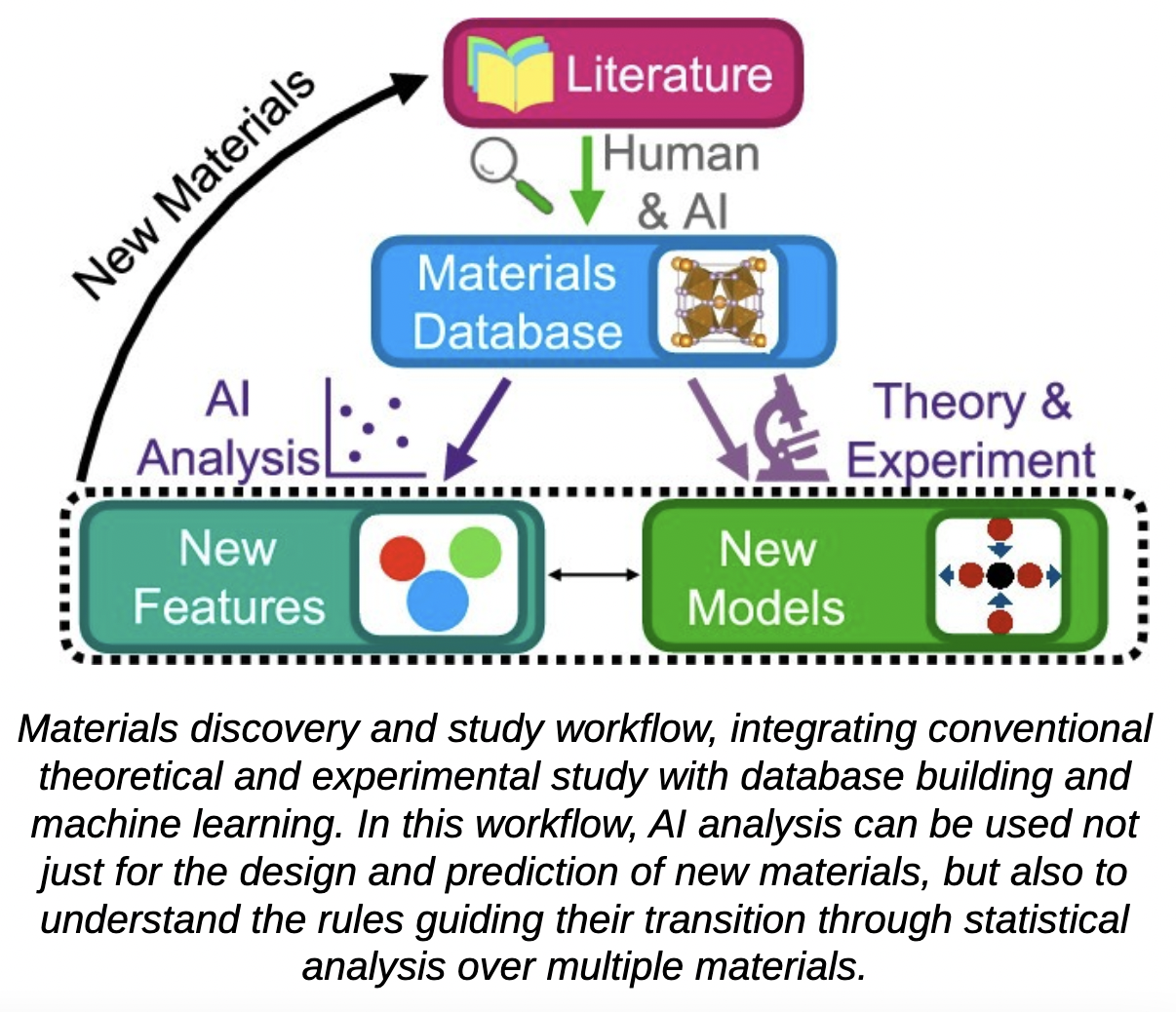
Integrating Physics-based Models with Data-driven Methods for Materials Discovery
James Rondinelli (Northwestern University)
Metal-insulator transition (MIT) compounds are materials that can undergo an electronic phase changes and are promising platforms to build next-generation low-power microelectronics. Accelerated discovery is challenging using high-throughput screening because high-fidelity quantum-mechanical simulations are computationally prohibitive to perform.
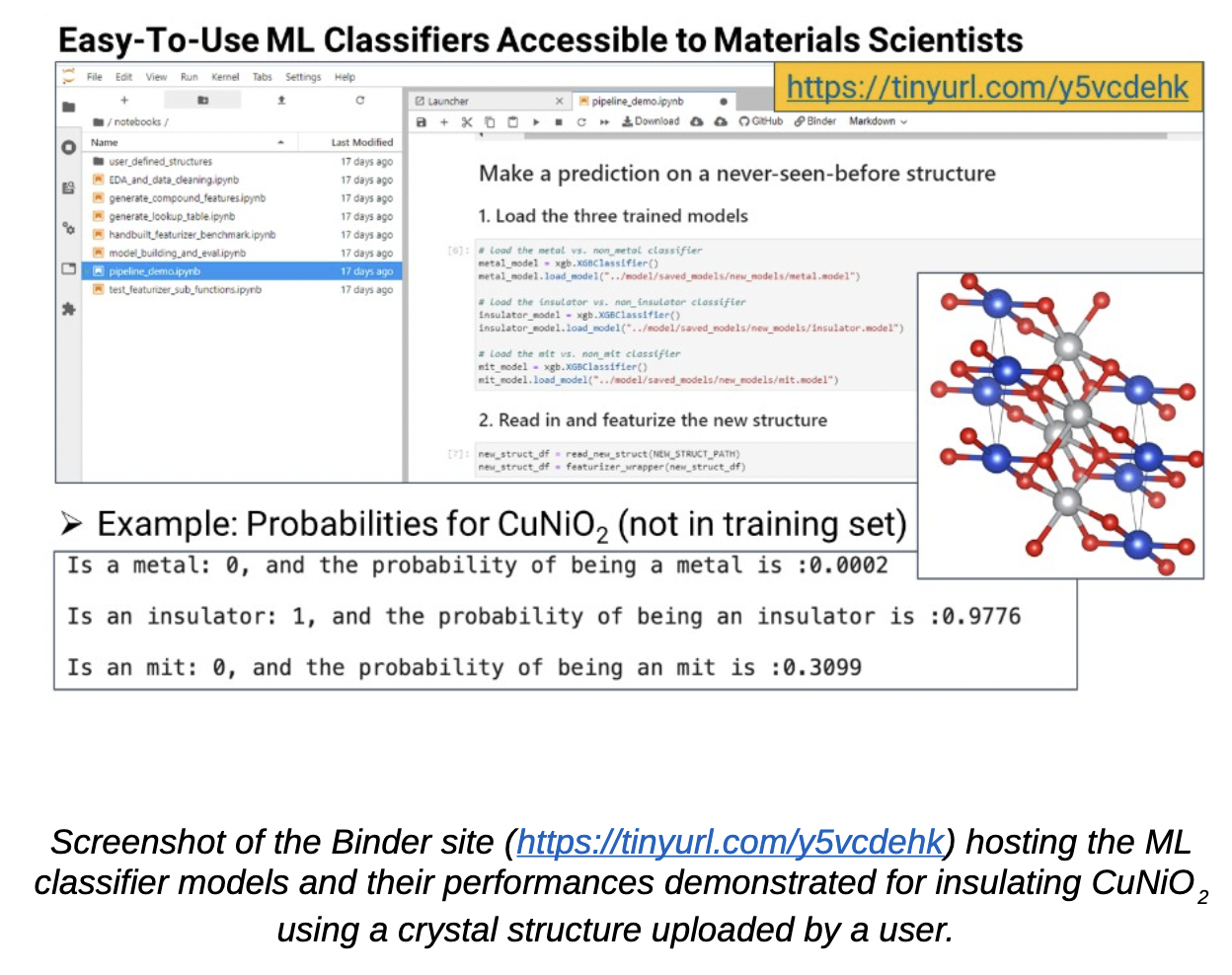
Broadening Participation in Electronic Materials Research
James Rondinelli (Northwestern University)Stephen Wilson and Ram Seshadri (UCSB)
Enhancing Access to Machine-Learning Models. We packaged our electronic classifiers and made them publically available. They are easily accessible via an interactive Jupyter notebookhosted by Binder.
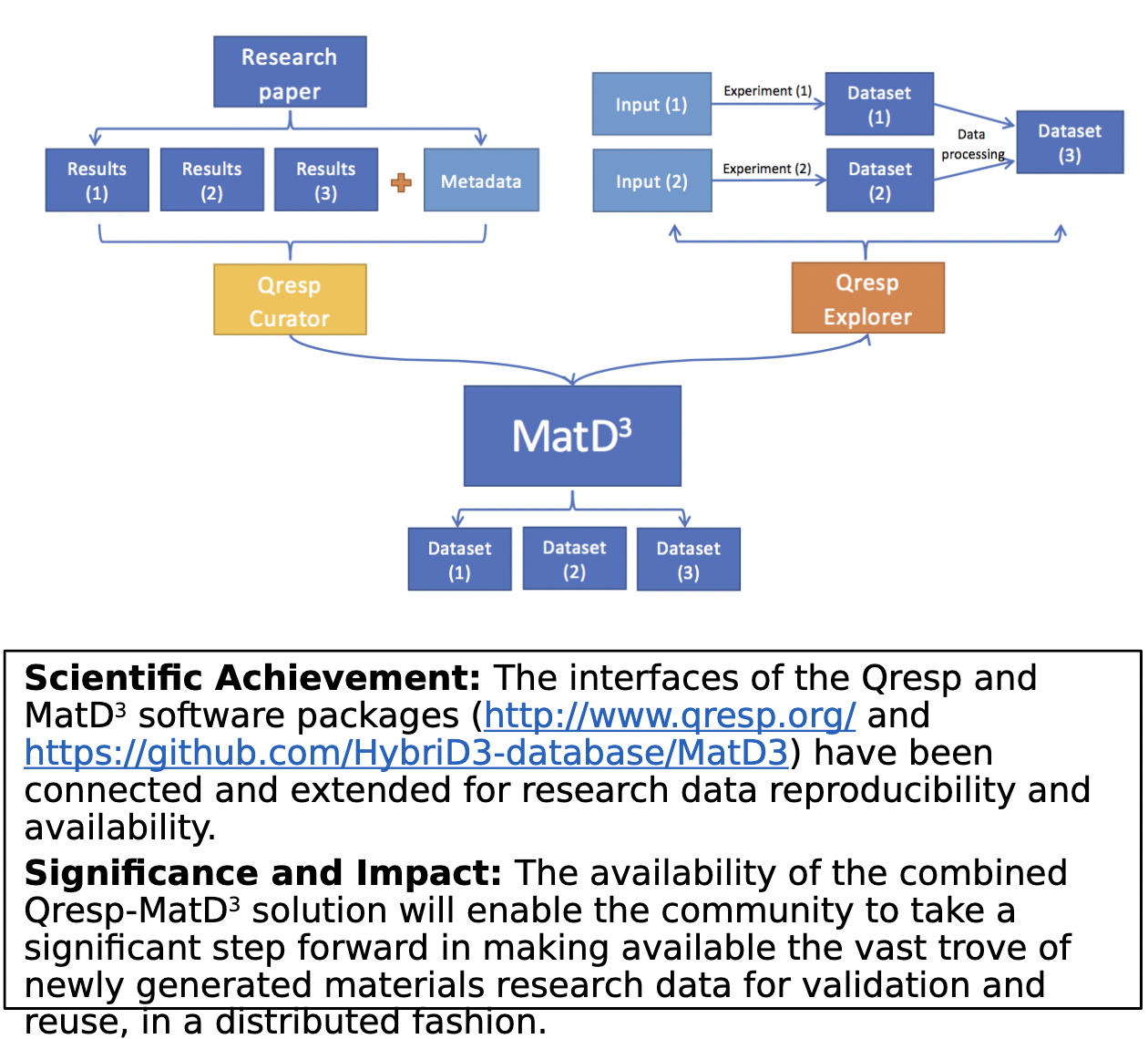
Data Reproducibility and Traceability forCommunity Materials Databases: Qresp for MatD3
Volker Blum
The discovery of new materials as well as the determination of a vast set of materials properties for science and technology is a fast-growing field of research, with contributions from many groups worldwide.
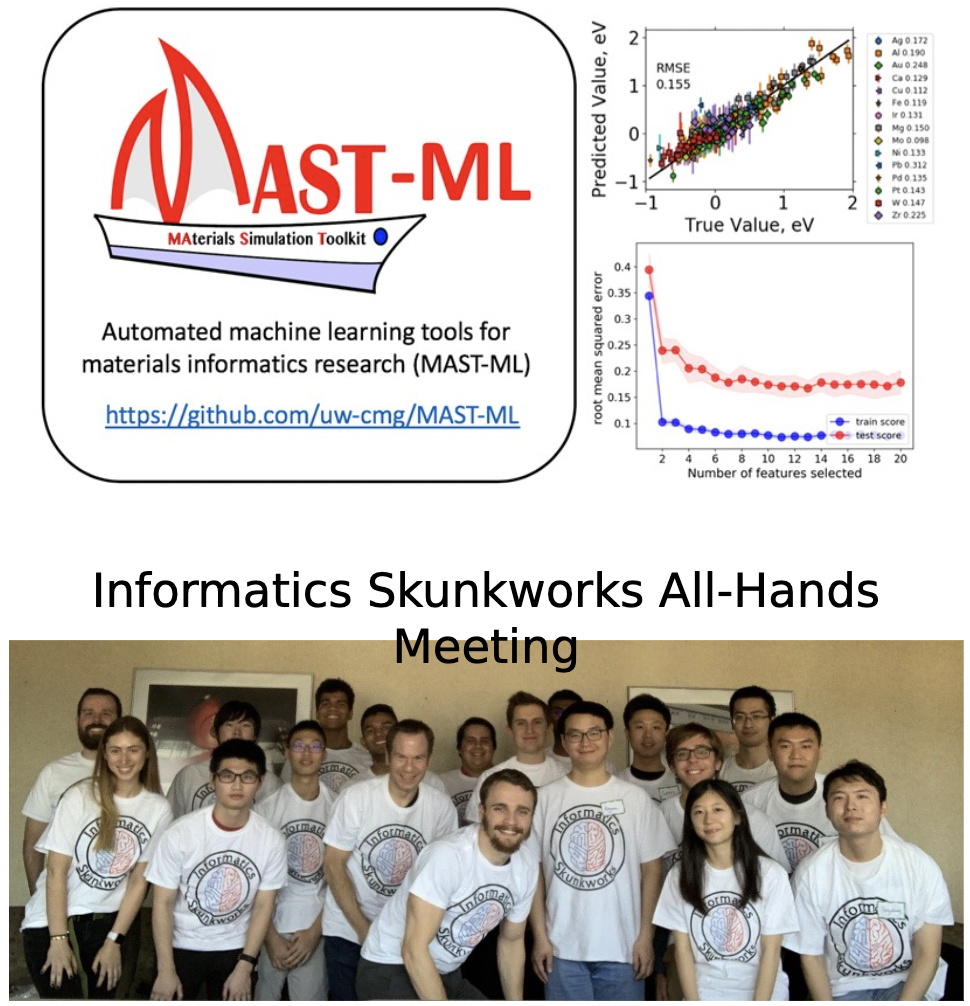
Materials Simulation Toolkit
Dane Morgan (University of Wisconsin)
Data Driven Discovery of Topological Phononic Materials
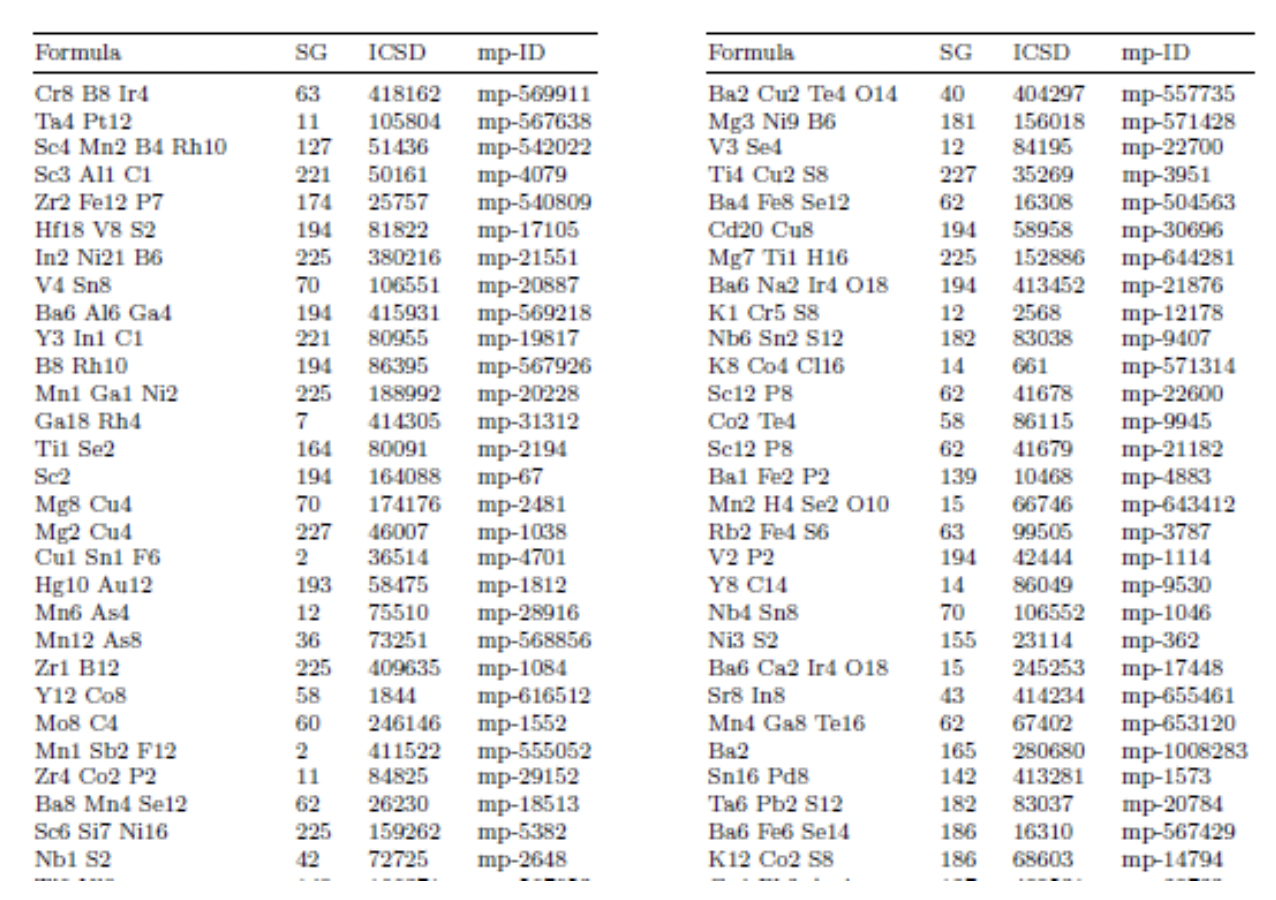
This DMREF project has demonstrated an alternative avenue for the prediction of new topological materials from simple spectroscopic features, addressing the DMREF value of “significantly accelerate materials discovery and development”. In particular, the synergy of machine-learning modeling with the experimental validation addresses the DMREF concept to “work synergistically in a closed loop fashion.” The broadening of materials candidates further supports the DMREF mission to foster the “translation of materials research toward application”.
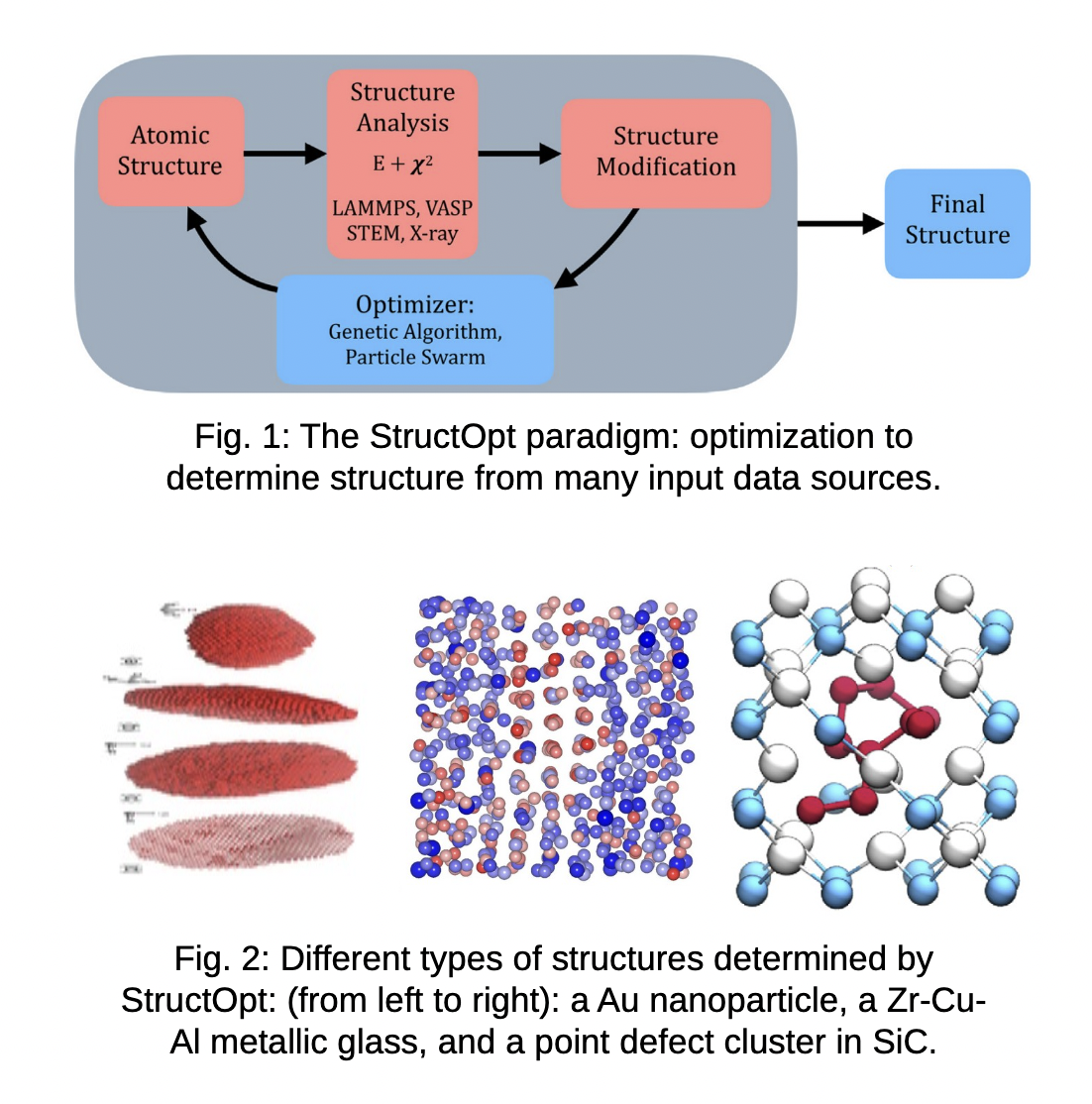
High Throughput Design of Metallic Glasses with Physically Motivated Descriptors
Dane Morgan and Paul Voyles (University of Wisconsin)
Broadening Participation in Electronic Materials Research Through Knowledge and Data Exchange
James Rondinelli (Northwestern University)
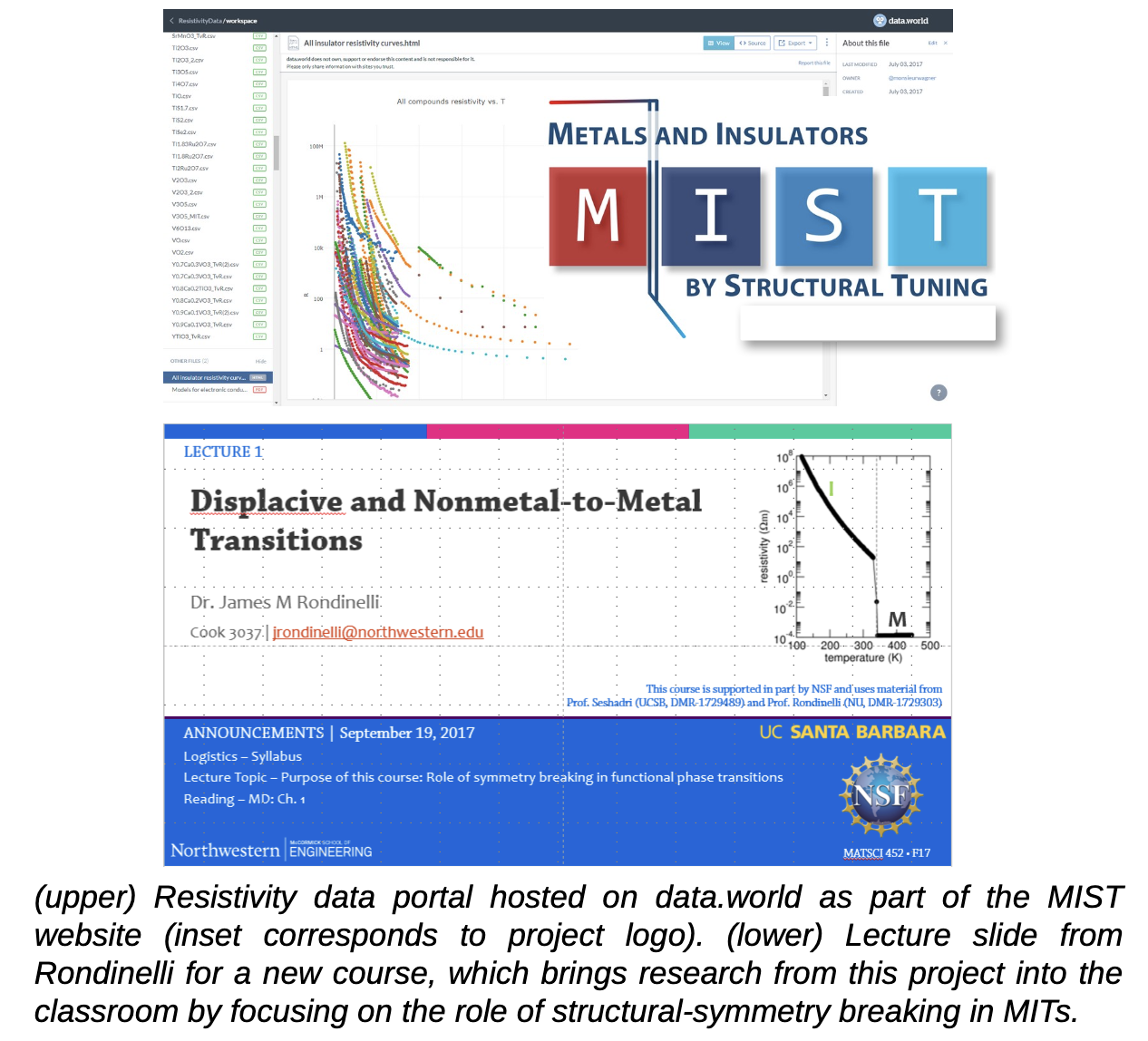
Enhancing Access to Data. In collaboration with DMR-1729489, we are working to deliver an open data/software ecosystem by disseminating broadly research data through the Metals and Insulators through Structural Tuning (MIST) website hosted on data.world (https://data.world/dmref-mist).
Tools for Block Polymer Materials Discovery
K. Dorfman (U. MN)
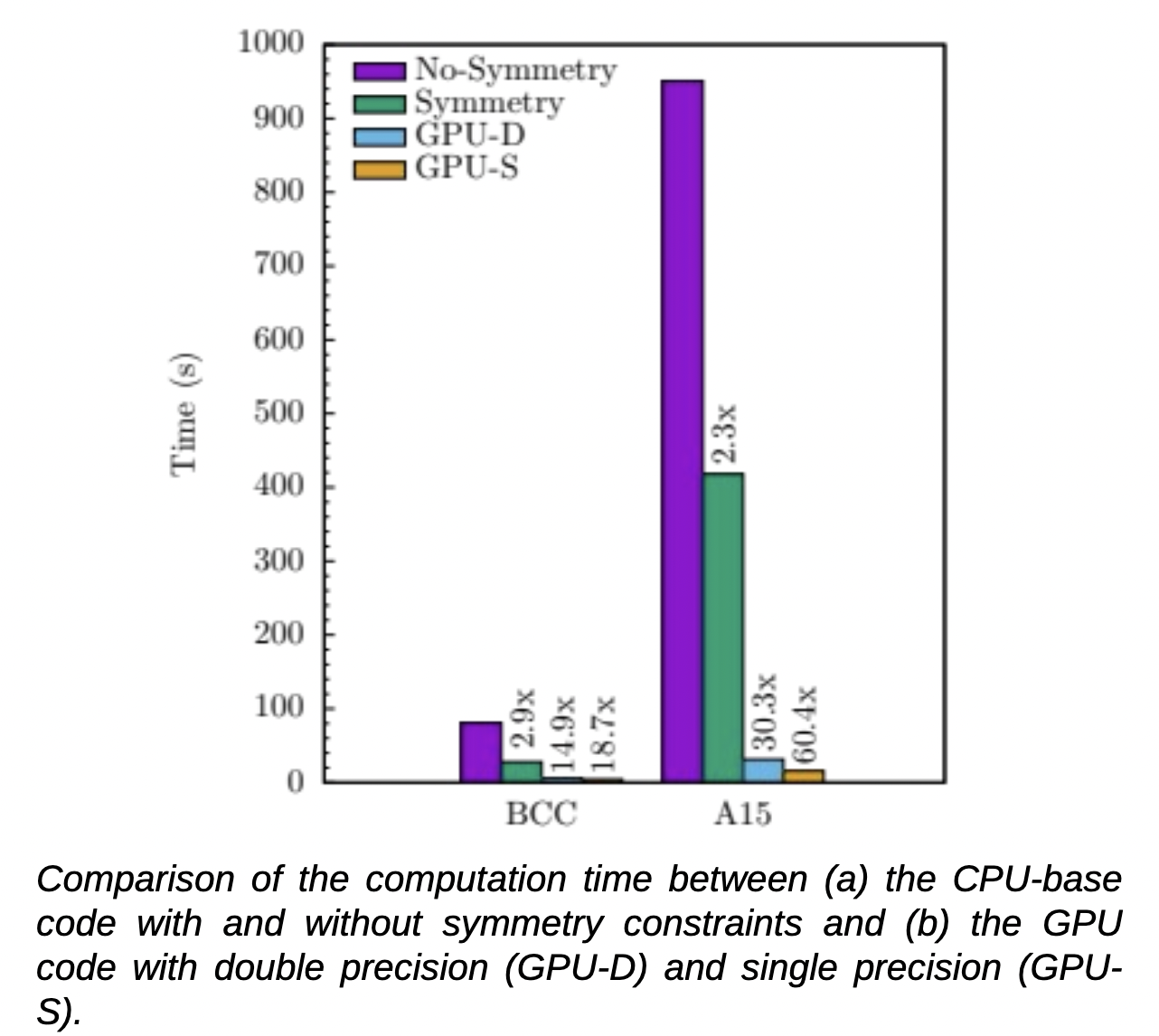
Implementing the Materials Genome Initiative-inspired approach for block polymer materials discovery employed by the PIs requires the availability of fast computational software for computing block polymer phase behavior
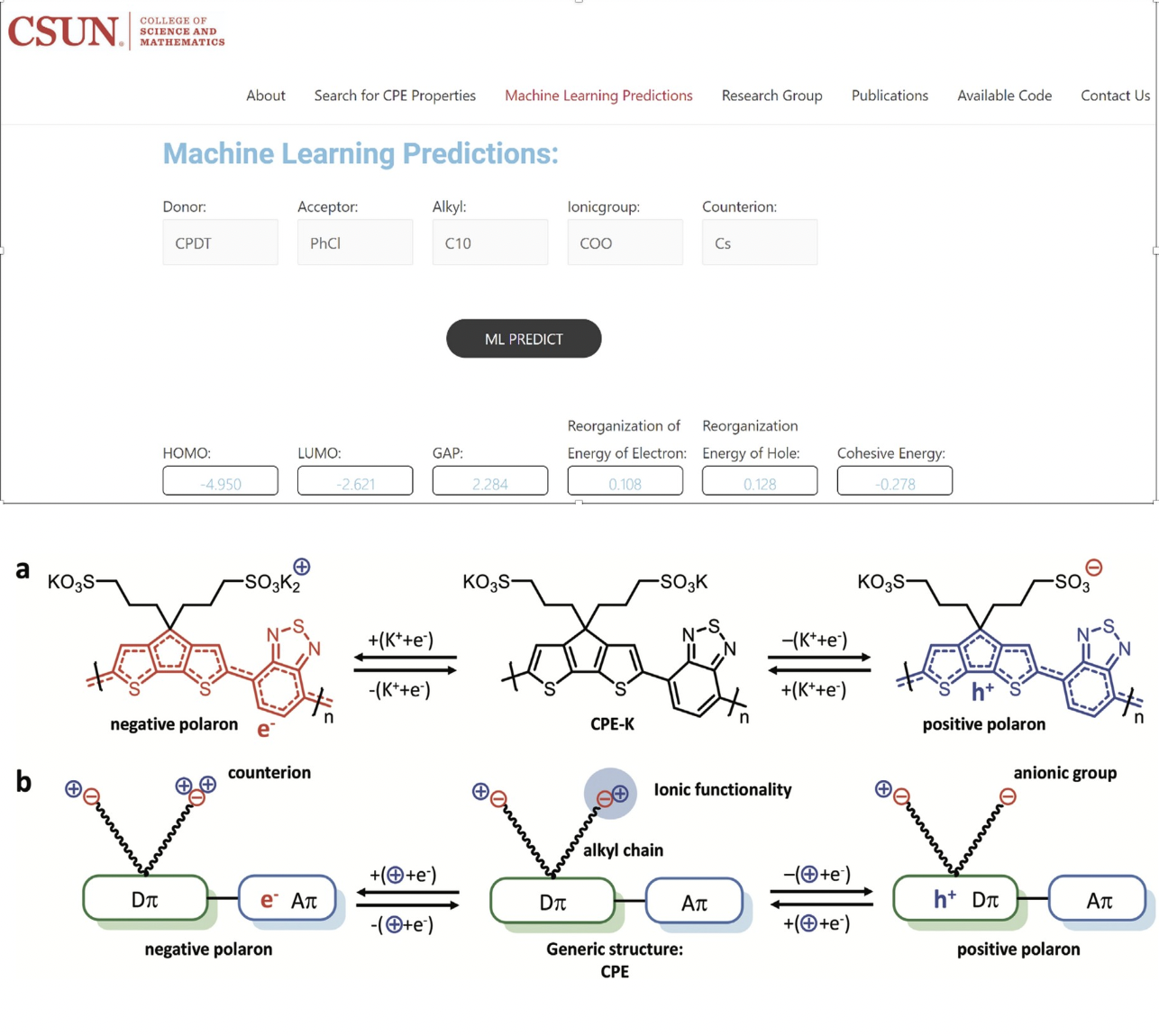
Data Driven Discovery of Conjugated Polyelectrolytes for Neuromorphic Computing
Gang Lu & Xu Zhang (California State University Northridge) Thuc-Quyen Nguyen & Guillermo Bazan (UCSB)
In this project, we have constructed a database on conjugated polyelectrolytes (CPEs) based on high-throughput first-principles calculations and machine learning modeling.
Showing 11 to 20 of 42